

Adolescence can be a confusing time for boys. Between physical changes, social pressure, academic expectations, and emotional development, teenage boys often receive mixed messages about what it means to “be a man.”
Many are encouraged to suppress emotions, appear strong at all times, or measure their worth through competition and achievement. Without healthy tools to process these pressures, boys may struggle with stress, anger, disconnection, or self-doubt.
Yoga offers a powerful and accessible way for teenage boys to develop emotional awareness, physical strength, and inner confidence ; all key elements of healthy masculinity.
This is exactly why Yogi Beans, a leading school for kids’ and teens’ yoga, has chosen to dedicate an article to this important topic. We often meet parents who aren’t quite sure how to support their teenagers through emotional ups and downs, and who sense that yoga could help, but don’t always know how to introduce it in a way that truly resonates.
I. What Is Healthy Masculinity?
Today, developing a healthy sense of masculinity can feel more complex than ever for teenage boys. They are growing up in a fast-changing world, constantly exposed to conflicting and at times misleading messages about strength, success, emotions, and identity.
At the same time, adolescence is a natural phase of separation, where boys begin to seek independence and define themselves beyond their parents. This often brings tension at home, but it’s also a crucial part of their growth. Without clear guidance or supportive spaces to explore what it means to become a man, many teens can feel lost, pulled between expectations and unsure of how to navigate their inner world.
This is why the idea of “healthy masculinity” matters today!
Healthy masculinity refers to a balanced and non-rigid way of expressing manhood. It is not about rejecting strength, ambition, or leadership. Instead, it expands the definition of masculinity to include qualities such as:
Emotional intelligence
Respect for others
Self-awareness
Empathy and compassion
Healthy expression of feelings
Teen boys benefit from spaces where they can explore these qualities without judgment. Yoga offers a framework where strength and vulnerability can coexist.
II. Is Yoga Good for Teenage Boys?
Yoga can be a game-changer for teenage boys, helping them to grow as healthy young men.
Sadly, not many boys or parents realise how yoga could support them.
While yoga is sometimes mistakenly seen as something primarily for girls, it was historically developed as a holistic practice for building strength, discipline, and mental clarity. Many of its benefits align perfectly with what adolescents need during this developmental stage.
Regular yoga practice can help teenage boys:
Building Strength and Mobility
Yoga develops functional strength through controlled body movements while improving mobility, strength and flexibility ; areas where many teens are often restricted.
Learning to Regulate Stress and Emotions
Adolescence can bring intense emotional waves, often without clear outlets. Through breathwork and mindful movement, yoga helps regulate the nervous system, giving boys practical tools to manage stress, frustration, and anxiety in real time.
Strengthening Focus and Self-Control
By bringing attention to breath and movement, yoga trains concentration and supports impulse control. These skills are essential not only in school, but also in social situations and decision-making.
Developing Body Awareness and Self-Trust
Yoga shifts the focus away from performance and comparison. Instead, boys learn to listen to their bodies, recognize their limits, and build a sense of internal guidance, an important foundation for confidence and autonomy.
Offering a Safe Space to Be Themselves
Perhaps most importantly, yoga can provide a rare environment where boys are not expected to perform, compete, or “hold it together.” In a supportive setting, they can slow down, connect with themselves, and experience that strength also includes awareness, sensitivity, and presence.
Finding Healthy Role Models
Yoga classes offer more than individual benefits ; they expose teenage boys to positive role models and, over time, foster a sense of belonging.
For many young men in the process of building their identity, it’s important to see peers exploring similar paths outside of their family environment. Being part of a group where other boys are practicing, showing up, and engaging with the same tools helps normalize not just the practice of yoga, but the broader experience of being a teenager, navigating strong emotions, physical changes, and inner uncertainty. It reassures them that they’re not alone, while also offering real-life examples of a more balanced and healthy way of being. Over time, this shared experience can foster connection, mutual support, and a more grounded sense of identity.
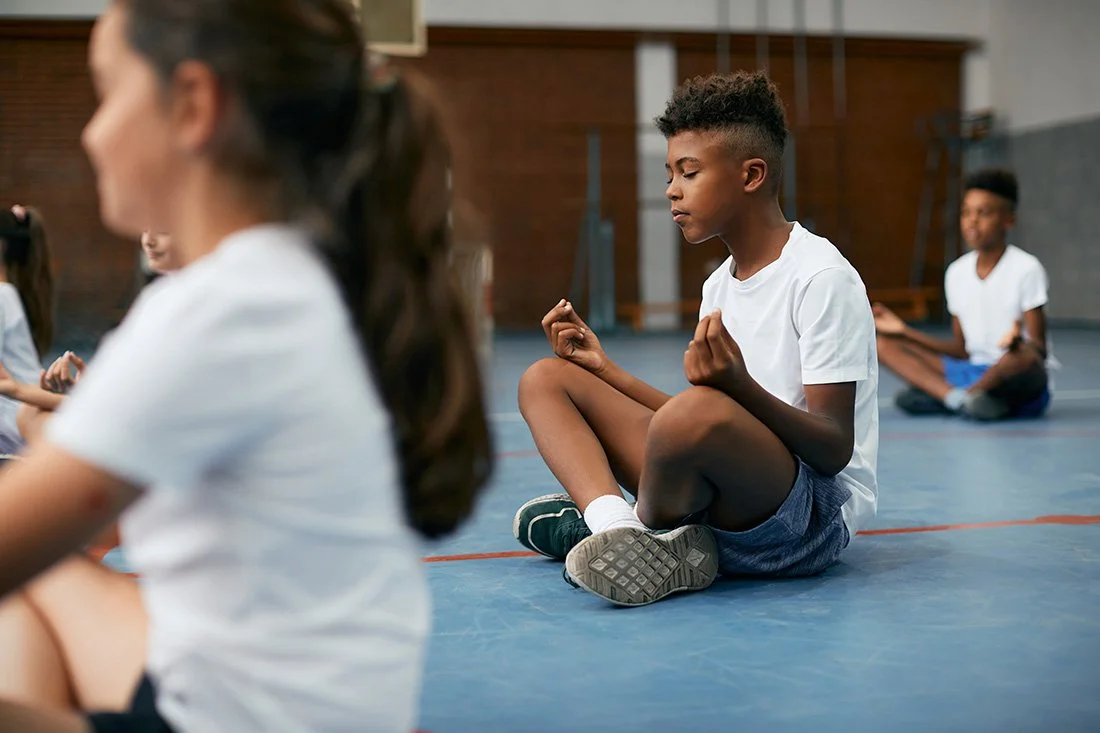
III. What Type of Yoga Is Best for Teenage Boys?
Teenage boys often have a lot of energy to move through their bodies. At first, yoga might seem too slow or too quiet to meet that need. But in reality, yoga is not a one-size-fits-all practice.
There are many different styles, some dynamic and physically challenging (Vinyasa, Rocket…), others slower and more introspective (Yin, restorative..). This variety allows each teen to find an approach that resonates with their personality, energy level, and interests.
Here are a few styles that tend to work particularly well for teenage boys:
1. Teen Yoga
Classes designed specifically for teens create an environment that feels relevant, engaging, and age-appropriate. They often combine movement, breathwork, and moments of reflection, while addressing real-life topics like stress, confidence, and emotions. Just as importantly, they offer a space where boys can feel understood and comfortable being themselves.
2. Vinyasa Yoga
Vinyasa is a dynamic, flowing style where movement is linked to the breath. Sequences are dynamic and almost dance-like, combining strength, endurance and coordination. For teens who enjoy movement and variety, Vinyasa keeps them engaged while also introducing focus and body awareness.
3. Rocket Yoga
Rocket Yoga is a more fast-paced and playful style inspired by Ashtanga yoga. It encourages exploration, challenges, and progression, which can be especially appealing for boys who like to push themselves physically. It builds strength, flexibility, and confidence, while keeping a sense of fun and freedom in the practice.
That said, if it’s your teenager’s very first experience with yoga, Rocket Yoga can sometimes feel a bit intense. Starting with a more accessible or foundational class, like vinyasa or teen yoga, may help build confidence before moving into this more demanding style.
4. Yin or Restorative Yoga
While more active styles often draw teens in at first, slower practices like Yin or Restorative yoga play an essential role. They teach boys how to slow down, release tension, and connect inward. In a world that constantly stimulates and pushes them, learning to pause and regulate their nervous system is a powerful skill.
At Yogi Beans, as specialists in kids’ and teen yoga, we always recommend starting with a class designed specifically for teenagers. These classes are tailored to their age, energy, and developmental needs, making the experience more engaging and relatable from the start.
If a teen joins a general Vinyasa class in a regular studio, they may find themselves surrounded mostly by adults, which can feel intimidating or disconnecting. In that setting, it’s easy to lose the sense of belonging and the opportunity to identify with peers, both of which are essential in helping teenage boys feel comfortable and supported in their practice.
IV. How to Introduce Yoga to Teenage Boys?
Even when parents recognize the benefits of yoga, it’s not always easy to get teenage boys interested. At this age, teens are developing their independence and can be resistant to anything that feels imposed or unfamiliar.
The key is not to “convince,” but to introduce yoga in a way that feels relevant, accessible, and respectful of their autonomy.
1- Start with What Resonates
Instead of presenting yoga as something they should do, connect it to what already matters to them. For some boys, that might be improving sports performance, building strength, or increasing focus. For others, it could be managing stress, sleeping better, or simply feeling more at ease in their bodies.
Meeting them where they are creates natural curiosity instead of resistance.
2- Choose the Right Style and Environment
As you may have read in part IV, there are different styles of yoga, and they don’t feel the same. In general, teenage boys often respond better to dynamic, engaging classes that include movement and challenge, such as vinyasa or teen yoga.
Just as important is the environment. A space that feels welcoming, non-judgmental, and age-appropriate can make all the difference in whether they feel comfortable showing up.
3- Lead by Example
Teenagers are often more influenced by what parents do than what they say. Practicing yoga yourself, or simply sharing how it helps you manage stress or feel better, can spark interest without pressure.
It becomes something they can choose, rather than something they’re told to do.
4- Keep It Low-Pressure
Avoid forcing or over-explaining. A single positive experience is often more powerful than repeated encouragement.
You might invite them to try one class, a short session at home, or even a few minutes of stretching after sports. The goal is to open the door, not push them through it.
5- Normalize the Practice
Yoga doesn’t have to be framed as something “different” or outside of their world. When presented as a tool for strength, recovery, and mental clarity, it becomes much easier for boys to relate to.
Over time, this helps shift the perception of yoga, from something unfamiliar to something genuinely useful.
Helping boys develop healthy masculinity is not about changing who they are. It’s about giving them the tools to grow into balanced, compassionate, and confident men.
At Yogi Beans, we strongly believe that kids' and teens' yoga helps support the next generation. Yoga provides those tools in a practical and engaging way.
By introducing teen boys to yoga early, we help them build habits of self-awareness, resilience, and respect that can support them throughout their lives.

Let’s go on a yoga adventure!
Let your imagination soar as you become a bouncing Frog 🐸, a magical Mermaid 🧜 or a soaring Rocket Ship! 🚀

Connect with us!
Welcome Friends!
Yogi Beans is a yoga and wellness company for children. Come make the world a brighter place with us!
