
Creative & Fun Ways to Teach the Sun Salutation (Surya Namaskar) to Children
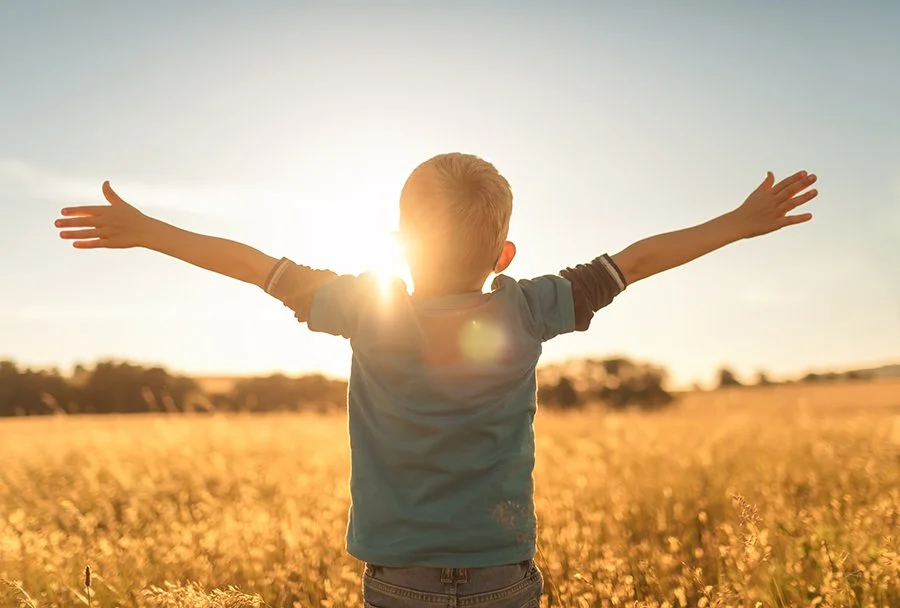
Most yoga practitioners, including children, have come across Surya Namaskar, also known as the Sun Salutation. This beautiful sequence of yoga postures is the most well-known practices in yoga traditions around the world.
But the Sun Salutation is much more than a simple flow of movements. Traditionally, it is a ritual of gratitude ; an offering to the sun, the source of light and life. Through movement, breath, and awareness, it invites us to connect with ourselves and the world around us.
For both adults and children, this practice offers many physical, mental, and emotional benefits, which we will discuss in this article.
With children, however, teaching a traditional Sun Salutation requires a little more creativity. Young yogis don’t want to simply hear instructions like “inhale, raise your arms, exhale, fold forward.” They want to play, imagine, move, and have fun.
At Yogi Beans, one of the leading schools for kids’ yoga, we’ve explored creative ways to adapt traditional yoga practices like the Sun Salutation for young yogis. Through our programs, we help teachers discover how to make yoga playful, engaging, and meaningful for children. Learn more about our full Kids Yoga Teacher Certification, or explore the Kids Yoga Blueprint if you’re looking to build a strong foundation in teaching yoga to children.
In this article, we’ll share creative and fun ways to teach the Sun Salutation to children of different ages, from preschoolers to tweens, while keeping the practice joyful and accessible.
Sun Salutation for Kids: How to Adapt the Practice by Age
Teaching Sun Salutations to Preschoolers: Start with Play
For preschoolers, a full traditional Surya Namaskar can feel far too complex ; and honestly, not very exciting for little yogis! Instead, we break the sequence down into simple, playful movements that meet young children where they are.
At this age, it doesn’t have to look exactly like a traditional Sun Salutation. What matters most is that children connect with their breath, their bodies, and the world around them through movement and imagination.
The poses are adapted to be easy and accessible, with most of the movements happening on the ground.
Simple Sun Breaths: Connecting Movement and Breath
For our youngest yogis, it can be helpful to introduce simple Sun Breaths before bringing them into a Sun Salutation with asanas, even simple ones. This allows children to gently explore the connection between breath and movement in a fun and natural way.
Through these simple breathing exercises, children begin to notice how their breath changes as they move and discover how they can use their breath as part of their yoga practice.
You can make this playful by inviting them to “fill their bodies with sunshine” as they inhale while opening their arms wide, and then “give themselves a warm sunshine hug” as they exhale and bring their arms back in.
Mini Sun Salutation: A Yoga Animal Adventure
The Mini Sun Salutation introduces children to the basic movements of a Sun Salutation while keeping everything low to the ground.
Rather than moving through standing poses, preschoolers explore simple animal-inspired poses such as:
Cat and Cow
Downward Dog
Pony
Snake
Adding animal sounds transforms the practice into a fun imagination game. Children can meow like a cat, bark like a dog, or hiss like a snake as they move through the flow.
This approach helps children:
Stay engaged
Remember the movements more easily
Use their imagination
Feel comfortable exploring their bodies
At this age, the goal is not perfect alignment; it is creating a joyful relationship with movement and breath. Children naturally connect with animals, and bringing imagination into the practice helps them stay engaged, curious, and confident in their bodies.
If you want to learn how to share the Sun Salutation with children like a kids’ yoga instructor, explore our Kids Yoga Blueprint, a perfect introduction to the foundations of teaching yoga to children.
2. Teaching the Sun Salutation to elementary school children
As children grow, they become ready to explore a more traditional Sun Salutation flow. For ages 5–10, Surya Namaskar A can be introduced in a way that feels playful while still helping children develop focus, coordination, and body awareness.
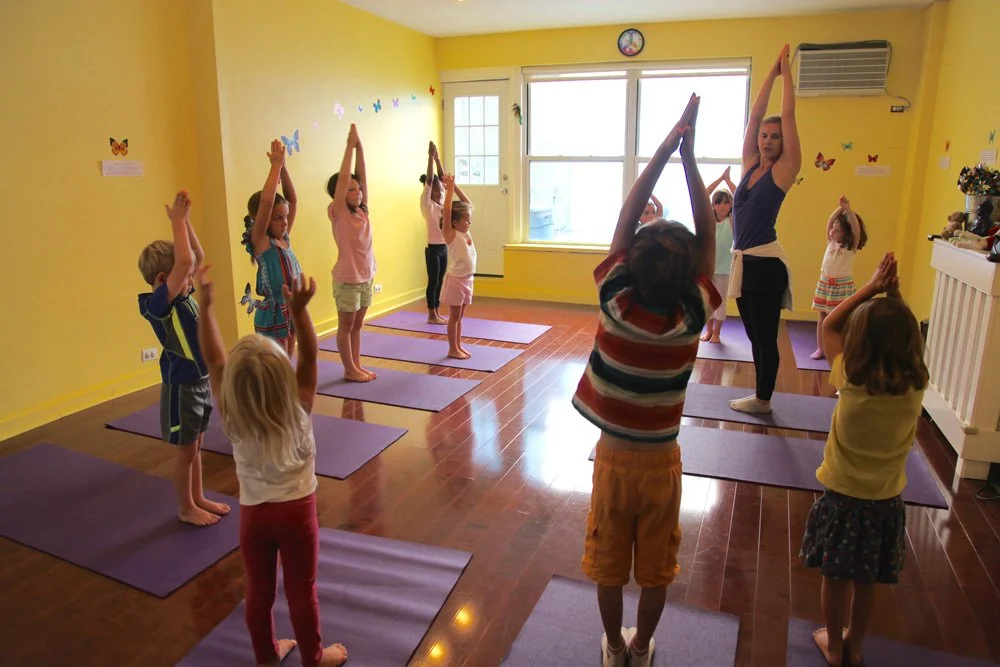
One of the most effective ways to teach this sequence is through a call-and-response rhyme. Instead of asking children to memorize a series of instructions, the rhyme allows them to move, listen, speak, and remember the order of the poses naturally. The sequence becomes less like a set of directions and more like an interactive game.
The Sun Salutation rhyme is explored in depth inside our Kids Yoga Blueprint course, where teachers learn how to bring this approach into their classes.
Once children become familiar with the movements, you can keep the practice fresh and exciting by playing with different tones, voices, and rhythms. These small variations help children stay present and transform the practice into something joyful, creative, and empowering, even when the sequence stays the same.
3. Introducing Surya Namaskar B for Tweens and Teens
For older children, around age 10 and above, we can begin introducing Surya Namaskar B.
This variation is more challenging because it includes additional movements and requires more strength, coordination, and body awareness.
Just like Surya Namaskar A, we teach Surya Namaskar B through a playful rhyme to help students remember the sequence while keeping the practice accessible and enjoyable.
Tweens and teens often appreciate having a more structured flow that feels closer to an adult yoga practice, while still keeping an element of creativity and fun.
Stay with us until the end to discover creative ways to make each Sun Salutation even more playful, engaging, and memorable.
We also have a dedicated article on yoga for teens if you’d like to explore this topic further.
How can the yogic Sun Salutation help children?
The yogic Sun Salutation (Surya Namaskar) can support children in many ways, both physically and emotionally. When adapted to their age and abilities, it becomes a playful, accessible practice that helps children connect with their bodies and minds.
1. Builds strength and flexibility
Sun Salutation moves through different postures that gently strengthen the legs, arms, core, and back while improving flexibility and body awareness. For children, it supports healthy movement patterns and coordination.
2. Improves balance and body awareness
Moving from one pose to another helps children develop proprioception — the ability to understand where their body is in space. This can improve coordination, posture, and confidence in physical activities.
3. Encourages focus and concentration
The combination of movement and breathing invites children to slow down, pay attention, and stay present. Practicing a sequence also helps develop memory and concentration skills.
4. Supports emotional regulation
The rhythmic flow of Sun Salutation, combined with mindful breathing, can help children release energy, calm their nervous system, and find a sense of inner balance.
5. Creates a healthy morning or daily ritual
Traditionally practiced to welcome the sun and start the day, Sun Salutation can become a grounding routine that helps children transition, wake up their bodies, or prepare for learning.
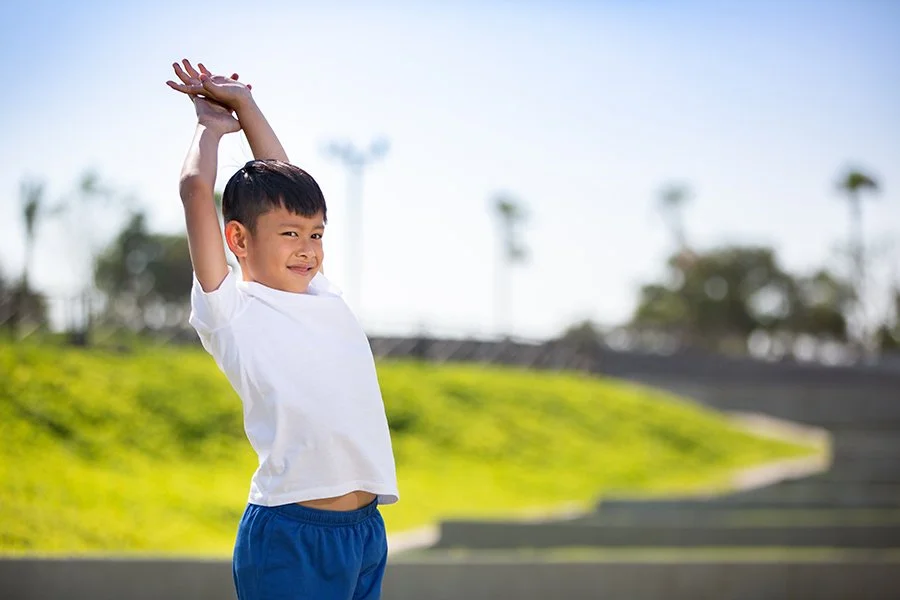
6. Develops confidence and self-expression
Learning and remembering a yoga sequence gives children a sense of achievement. When taught creatively (with stories, animals, songs, or imagination), it encourages playfulness and self-expression.
7. Connects children with nature and mindfulness
The symbolism of greeting the sun can introduce children to gratitude, awareness, and a deeper connection with the world around them.
Creative Ways to Make the Sun Salutation More Fun for Children
Once children are familiar with the basic Sun Salutation sequence, there are many ways to bring more creativity, imagination, and joy into the practice. Small changes can transform the same flow into a new adventure every time.
1. Use props to bring the story to life
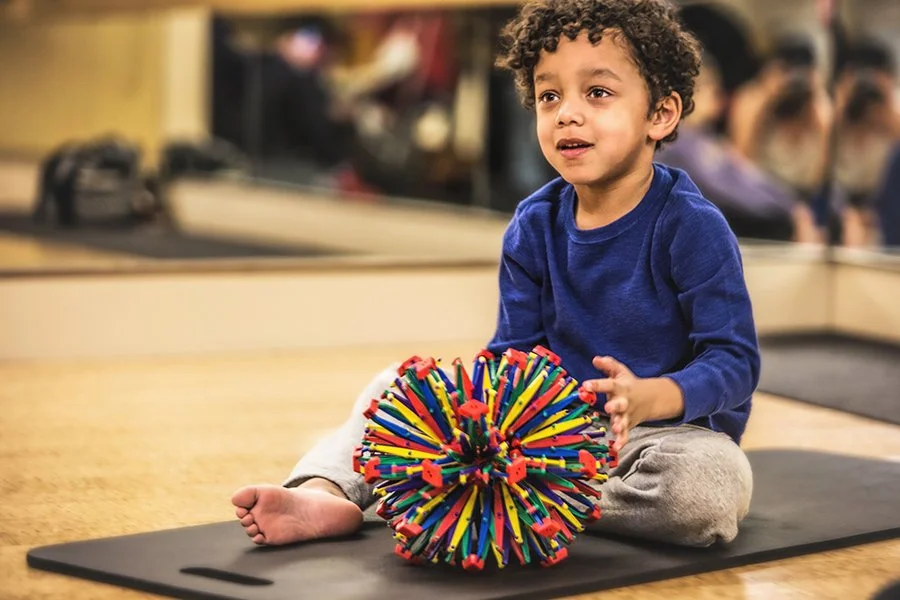
Props are a wonderful way to make the Sun Salutation more interactive and engaging. You can use cards with yoga poses, animal pictures to inspire movements, or scarves as “sun rays” that children can wave and move with as they flow.
2. Add a rhythm or chant
Children love repetition, and adding a simple rhythm can help them remember the sequence while making it feel like a game.
You can create your own playful chants, such as:
“Reach up high,
Touch the sky,
Bend down low,
Watch us grow!”
The combination of words, movement, and rhythm helps children stay connected and engaged.
3. Add music they love
Music can completely change the energy of a yoga class. Choose songs with a rhythm that matches the age group and invite children to move with the beat as they practice their Sun Salutation.
4. Salute something they love
The Sun Salutation does not always have to be about the sun! Invite children to imagine they are offering gratitude to something meaningful in their lives, like their family, friends, pets, or even something funny like their spaghetti! This helps them connect the practice with gratitude and imagination.
5. Salute each other
Turn the Sun Salutation into a partner activity by having children face each other. One child creates a short yoga flow of 3–10 poses, according to their age and experience, while their partner mirrors the movements.This variation encourage focus, creativity, and connection.
6. Let children become the teacher
Children love taking responsibility and sharing what they know. Once they feel confident with the sequence, invite them to teach the Sun Salutation to their friends or lead one asana each with their own creative twist, such as adding funny sounds, animal noises, or playful variations. This helps them build confidence, develop leadership skills, and add their own unique voice to the practice.
Making Sun Salutations a Kids' Yoga Tradition
The beauty of teaching Sun Salutations to children is that the practice can grow with them.
Preschoolers may begin with animal movements and simple breathing. Older kids may learn full sequences through rhymes and music. Tweens and teens can explore more challenging variations.
The most important part is creating a positive experience. When children associate yoga with creativity, play, and connection, the Sun Salutation becomes something they look forward to practicing again and again. Just like in an adult yoga class, where Sun Salutations are often practiced every week, we encourage you to bring these variations into your own weekly routine as a warm up with your students.

Let’s go on a yoga adventure!
Let your imagination soar as you become a bouncing Frog 🐸, a magical Mermaid 🧜 or a soaring Rocket Ship! 🚀

Connect with us!
Welcome Friends!
Yogi Beans is a yoga and wellness company for children. Come make the world a brighter place with us!
