
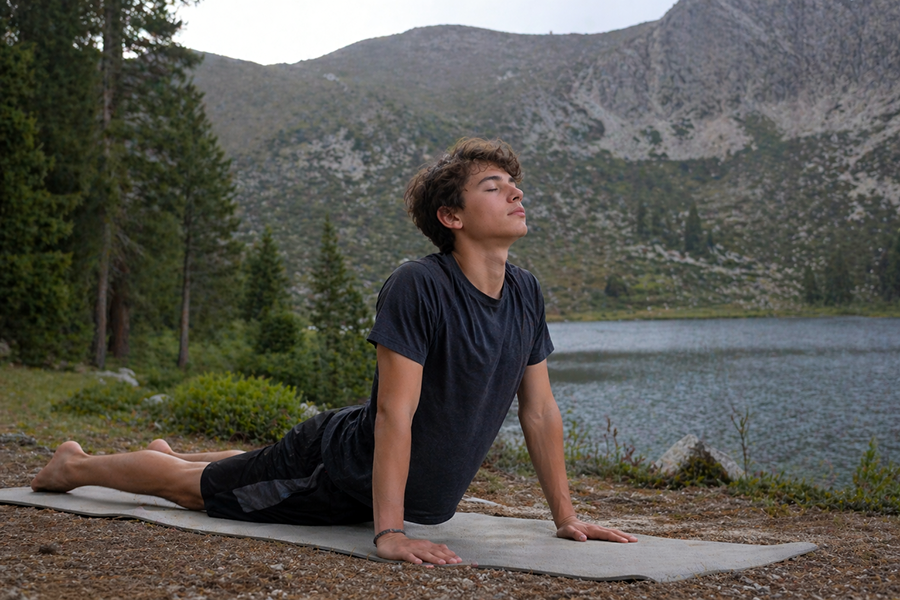
Healthy Masculinity Through Yoga : Tools for Teen Boys
Yoga offers a powerful and accessible way for teenage boys to develop emotional awareness, physical strength, and inner confidence ; all key elements of healthy masculinity.
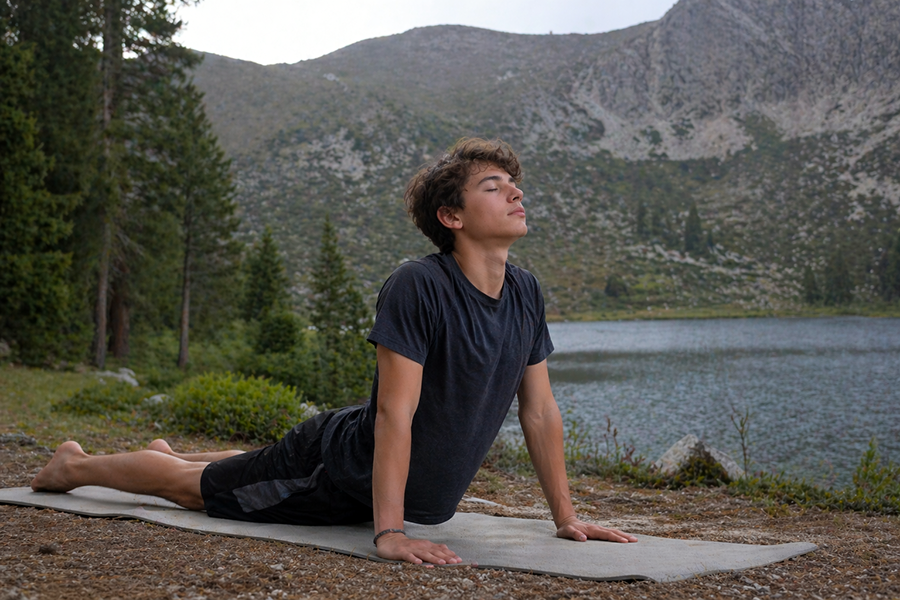
Adolescence can be a confusing time for boys. Between physical changes, social pressure, academic expectations, and emotional development, teenage boys often receive mixed messages about what it means to “be a man.”
Many are encouraged to suppress emotions, appear strong at all times, or measure their worth through competition and achievement. Without healthy tools to process these pressures, boys may struggle with stress, anger, disconnection, or self-doubt.
Yoga offers a powerful and accessible way for teenage boys to develop emotional awareness, physical strength, and inner confidence ; all key elements of healthy masculinity.
This is exactly why Yogi Beans, a leading school for kids’ and teens’ yoga, has chosen to dedicate an article to this important topic. We often meet parents who aren’t quite sure how to support their teenagers through emotional ups and downs, and who sense that yoga could help, but don’t always know how to introduce it in a way that truly resonates.
I. What Is Healthy Masculinity?
Today, developing a healthy sense of masculinity can feel more complex than ever for teenage boys. They are growing up in a fast-changing world, constantly exposed to conflicting and at times misleading messages about strength, success, emotions, and identity.
At the same time, adolescence is a natural phase of separation, where boys begin to seek independence and define themselves beyond their parents. This often brings tension at home, but it’s also a crucial part of their growth. Without clear guidance or supportive spaces to explore what it means to become a man, many teens can feel lost, pulled between expectations and unsure of how to navigate their inner world.
This is why the idea of “healthy masculinity” matters today!
Healthy masculinity refers to a balanced and non-rigid way of expressing manhood. It is not about rejecting strength, ambition, or leadership. Instead, it expands the definition of masculinity to include qualities such as:
Emotional intelligence
Respect for others
Self-awareness
Empathy and compassion
Healthy expression of feelings
Teen boys benefit from spaces where they can explore these qualities without judgment. Yoga offers a framework where strength and vulnerability can coexist.
II. Is Yoga Good for Teenage Boys?
Yoga can be a game-changer for teenage boys, helping them to grow as healthy young men.
Sadly, not many boys or parents realise how yoga could support them.
While yoga is sometimes mistakenly seen as something primarily for girls, it was historically developed as a holistic practice for building strength, discipline, and mental clarity. Many of its benefits align perfectly with what adolescents need during this developmental stage.
Regular yoga practice can help teenage boys:
Building Strength and Mobility
Yoga develops functional strength through controlled body movements while improving mobility, strength and flexibility ; areas where many teens are often restricted.
Learning to Regulate Stress and Emotions
Adolescence can bring intense emotional waves, often without clear outlets. Through breathwork and mindful movement, yoga helps regulate the nervous system, giving boys practical tools to manage stress, frustration, and anxiety in real time.
Strengthening Focus and Self-Control
By bringing attention to breath and movement, yoga trains concentration and supports impulse control. These skills are essential not only in school, but also in social situations and decision-making.
Developing Body Awareness and Self-Trust
Yoga shifts the focus away from performance and comparison. Instead, boys learn to listen to their bodies, recognize their limits, and build a sense of internal guidance, an important foundation for confidence and autonomy.
Offering a Safe Space to Be Themselves
Perhaps most importantly, yoga can provide a rare environment where boys are not expected to perform, compete, or “hold it together.” In a supportive setting, they can slow down, connect with themselves, and experience that strength also includes awareness, sensitivity, and presence.
Finding Healthy Role Models
Yoga classes offer more than individual benefits ; they expose teenage boys to positive role models and, over time, foster a sense of belonging.
For many young men in the process of building their identity, it’s important to see peers exploring similar paths outside of their family environment. Being part of a group where other boys are practicing, showing up, and engaging with the same tools helps normalize not just the practice of yoga, but the broader experience of being a teenager, navigating strong emotions, physical changes, and inner uncertainty. It reassures them that they’re not alone, while also offering real-life examples of a more balanced and healthy way of being. Over time, this shared experience can foster connection, mutual support, and a more grounded sense of identity.
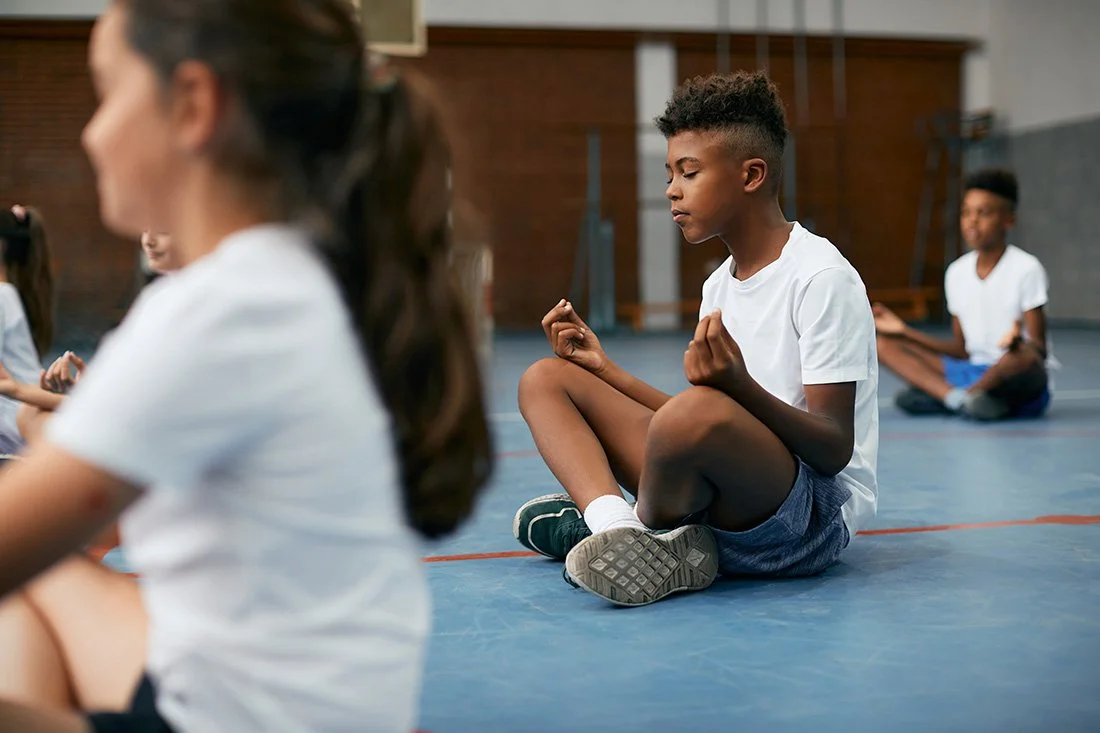
III. What Type of Yoga Is Best for Teenage Boys?
Teenage boys often have a lot of energy to move through their bodies. At first, yoga might seem too slow or too quiet to meet that need. But in reality, yoga is not a one-size-fits-all practice.
There are many different styles, some dynamic and physically challenging (Vinyasa, Rocket…), others slower and more introspective (Yin, restorative..). This variety allows each teen to find an approach that resonates with their personality, energy level, and interests.
Here are a few styles that tend to work particularly well for teenage boys:
1. Teen Yoga
Classes designed specifically for teens create an environment that feels relevant, engaging, and age-appropriate. They often combine movement, breathwork, and moments of reflection, while addressing real-life topics like stress, confidence, and emotions. Just as importantly, they offer a space where boys can feel understood and comfortable being themselves.
2. Vinyasa Yoga
Vinyasa is a dynamic, flowing style where movement is linked to the breath. Sequences are dynamic and almost dance-like, combining strength, endurance and coordination. For teens who enjoy movement and variety, Vinyasa keeps them engaged while also introducing focus and body awareness.
3. Rocket Yoga
Rocket Yoga is a more fast-paced and playful style inspired by Ashtanga yoga. It encourages exploration, challenges, and progression, which can be especially appealing for boys who like to push themselves physically. It builds strength, flexibility, and confidence, while keeping a sense of fun and freedom in the practice.
That said, if it’s your teenager’s very first experience with yoga, Rocket Yoga can sometimes feel a bit intense. Starting with a more accessible or foundational class, like vinyasa or teen yoga, may help build confidence before moving into this more demanding style.
4. Yin or Restorative Yoga
While more active styles often draw teens in at first, slower practices like Yin or Restorative yoga play an essential role. They teach boys how to slow down, release tension, and connect inward. In a world that constantly stimulates and pushes them, learning to pause and regulate their nervous system is a powerful skill.
At Yogi Beans, as specialists in kids’ and teen yoga, we always recommend starting with a class designed specifically for teenagers. These classes are tailored to their age, energy, and developmental needs, making the experience more engaging and relatable from the start.
If a teen joins a general Vinyasa class in a regular studio, they may find themselves surrounded mostly by adults, which can feel intimidating or disconnecting. In that setting, it’s easy to lose the sense of belonging and the opportunity to identify with peers, both of which are essential in helping teenage boys feel comfortable and supported in their practice.
IV. How to Introduce Yoga to Teenage Boys?
Even when parents recognize the benefits of yoga, it’s not always easy to get teenage boys interested. At this age, teens are developing their independence and can be resistant to anything that feels imposed or unfamiliar.
The key is not to “convince,” but to introduce yoga in a way that feels relevant, accessible, and respectful of their autonomy.
1- Start with What Resonates
Instead of presenting yoga as something they should do, connect it to what already matters to them. For some boys, that might be improving sports performance, building strength, or increasing focus. For others, it could be managing stress, sleeping better, or simply feeling more at ease in their bodies.
Meeting them where they are creates natural curiosity instead of resistance.
2- Choose the Right Style and Environment
As you may have read in part IV, there are different styles of yoga, and they don’t feel the same. In general, teenage boys often respond better to dynamic, engaging classes that include movement and challenge, such as vinyasa or teen yoga.
Just as important is the environment. A space that feels welcoming, non-judgmental, and age-appropriate can make all the difference in whether they feel comfortable showing up.
3- Lead by Example
Teenagers are often more influenced by what parents do than what they say. Practicing yoga yourself, or simply sharing how it helps you manage stress or feel better, can spark interest without pressure.
It becomes something they can choose, rather than something they’re told to do.
4- Keep It Low-Pressure
Avoid forcing or over-explaining. A single positive experience is often more powerful than repeated encouragement.
You might invite them to try one class, a short session at home, or even a few minutes of stretching after sports. The goal is to open the door, not push them through it.
5- Normalize the Practice
Yoga doesn’t have to be framed as something “different” or outside of their world. When presented as a tool for strength, recovery, and mental clarity, it becomes much easier for boys to relate to.
Over time, this helps shift the perception of yoga, from something unfamiliar to something genuinely useful.
Helping boys develop healthy masculinity is not about changing who they are. It’s about giving them the tools to grow into balanced, compassionate, and confident men.
At Yogi Beans, we strongly believe that kids' and teens' yoga helps support the next generation. Yoga provides those tools in a practical and engaging way.
By introducing teen boys to yoga early, we help them build habits of self-awareness, resilience, and respect that can support them throughout their lives.

Let’s go on a yoga adventure!
Let your imagination soar as you become a bouncing Frog 🐸, a magical Mermaid 🧜 or a soaring Rocket Ship! 🚀

Connect with us!
Welcome Friends!
Yogi Beans is a yoga and wellness company for children. Come make the world a brighter place with us!
Teach Kids Yoga with Confidence & Joy!
10 Animal Yoga Games Kids Really Love (From 2 to 10 Years Old)
Children are naturally curious, playful, and full of energy. That’s exactly why animal yoga works so well for kids.
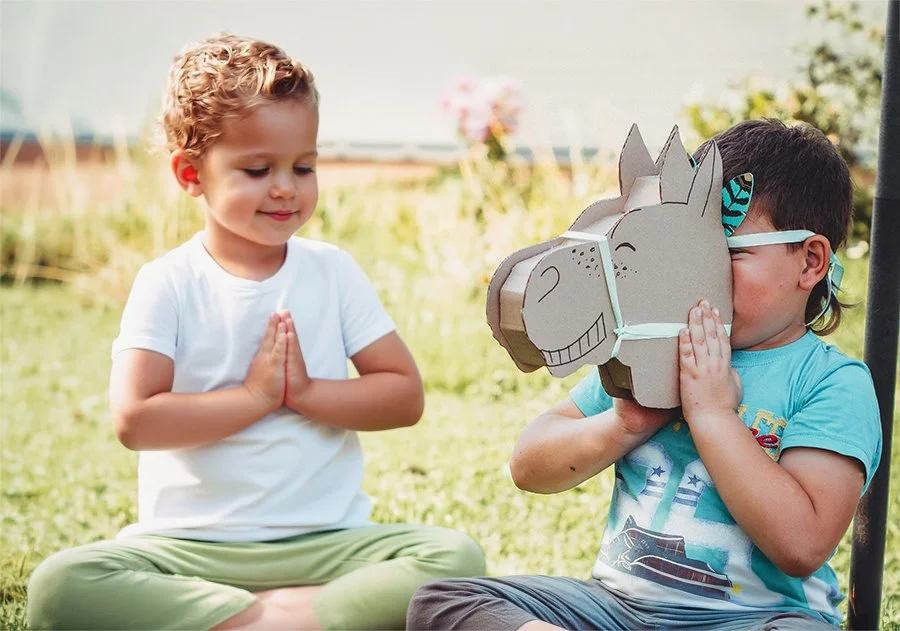
Children are naturally curious, playful, and full of energy. One moment they are calm and focused, and the next they might be jumping, roaring, or climbing like little wild animals.
That’s exactly why animal yoga works so well for kids.
Animal-inspired yoga poses are one of the easiest and most joyful ways to introduce yoga to children. Whether at home, school, in a park, or during a playdate, these playful yoga games can turn movement into a fun adventure. Children get to explore their creativity while learning how to move their bodies, release energy, and calm their minds.
Some of these games are drawn from the Yogi Beans Kids Yoga Teacher Training manual, where playful techniques help teachers bring yoga to life for children.
Yogi Beans has also created a book featuring 108 awesome yoga poses for kids, designed to make yoga fun, creative, and accessible for young learners and parents.
Animal Yoga Games for Toddlers:
A. Dog tunnel adventure 🐕
Best for: ages 2+
This group activity turns yoga into a playful obstacle course.
How to play:
Some children come into Downward Dog to create a tunnel.
The other children take turns moving through the tunnel.
They can crawl like a cat, slither like a snake, or sneak through like a fox.
Why kids love it:
This is a really fun game for children and their grown-ups. Kids really enjoy both building the tunnel and exploring it in creative ways.
B. Monkey Swing: Shake Out the Energy 🐒
Best for: ages 2+
Perfect for kids who have lots of energy to release.
How to play:
Stand with feet slightly apart.
Bend the knees and let the arms swing side to side like a playful monkey.
Add silly monkey sounds or small jumps.
After about 30 seconds, freeze like a statue and take a deep breath.
Why kids love it:
It’s playful, active, and feels more like a game than an exercise.
C. Giraffe Moves: Reach for the Sky and Dance 🦒
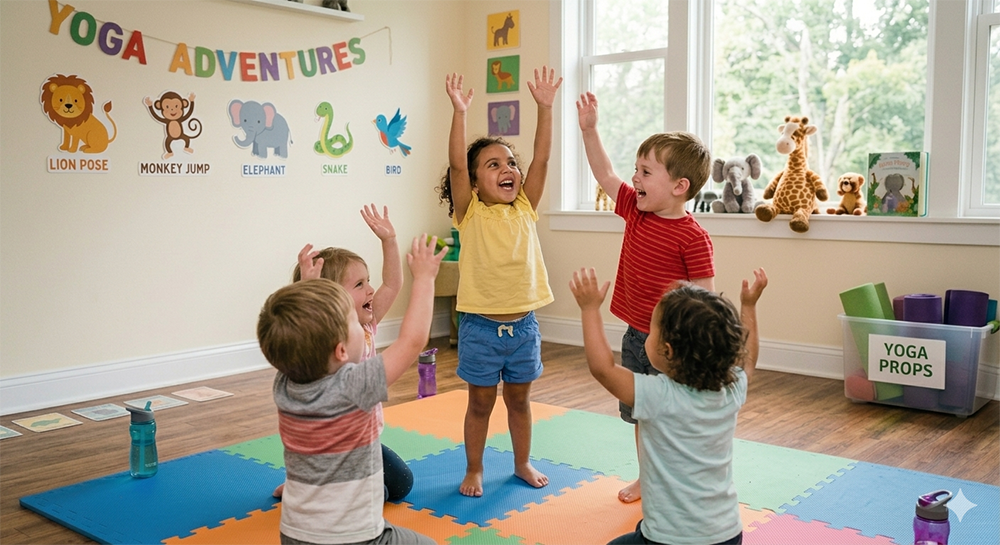
Best for: ages 2+
Inspired by the book Giraffes Can't Dance, this listening and movement game gets kids stretching tall while following playful instructions.
How to play:
Invite children to stand tall like giraffes with their arms stretched high above their heads.
Start with this simple stretch, especially for the youngest ones. You can ask them some silly and easy questions to make it funnier and engaging, such as “who is the tallest giraffe?”, “who likes giraffes?” or “who is hungry and wants to go higher?”
Depending on how the children respond, call out different leg movements such as marching, tiptoeing, squatting low, or jumping. Children keep their “giraffe necks” tall while following each instruction.
Why kids love it:
Kids enjoy pretending to be tall giraffes while moving their bodies in different ways. The changing directions keep the game exciting and help build coordination and listening skills.
Animal Yoga Games for Preschoolers:
If you’re practising yoga with preschoolers, you can have a look at the toddlers’ games in the above section. Our 2+ games can be enjoyed by older children!
A. Animal Freeze Dance 🐥
Best for: ages 3+
This high-energy game combines music, imagination, and body awareness.
How to play:
Give each child an animal to move like.
Play music and invite the children to move around the space like their animal.
When the music stops, everyone freezes in their best animal pose and holds it for three deep breaths.
Why kids love it:
Children love dancing and being silly with their animal characters. The freeze moment adds a fun challenge while helping them practice balance and stillness.
B. Secret Animal Buddy 🧸
Best for: ages 3+
A gentle and imaginative activity that helps children feel calm and safe.
How to play:
Invite children to sit quietly and imagine their favorite stuffed animal.
This is their secret animal buddy who makes them feel safe and cozy.
Encourage them to sit calmly so their animal buddy feels calm too.
They can silently share their worries, stories, or dreams with their buddy.
Why kids love it:
It combines imagination and comfort while helping children settle down.
C. Caterpillar to Butterfly 🦋
Best for: ages 3+
This imaginative activity takes kids through the magical transformation from caterpillar to butterfly.
How to play:
Invite children to crawl around the space like caterpillars.
Play the Yogi Beans We Are Butterflies song (Spotify and Apple Music’s link), and practice butterfly pose together, stretching, fluttering, and flying.
Then they roll themselves up in their yoga mat to become a cozy cocoon.
After a moment of rest, they slowly emerge as butterflies and come into butterfly pose, stretching their wings and fluttering around the room.
Why kids love it:
Kids absolutely love rolling up in their mats to become cocoons. The transformation into butterflies feels magical and gives them a chance to stretch, move, and fly around the room.
Download our free Butterfly Kit for even more fun while practising Butterfly Pose with your little beans!
D. Animal Story : Choose Your Own Adventure 🐱
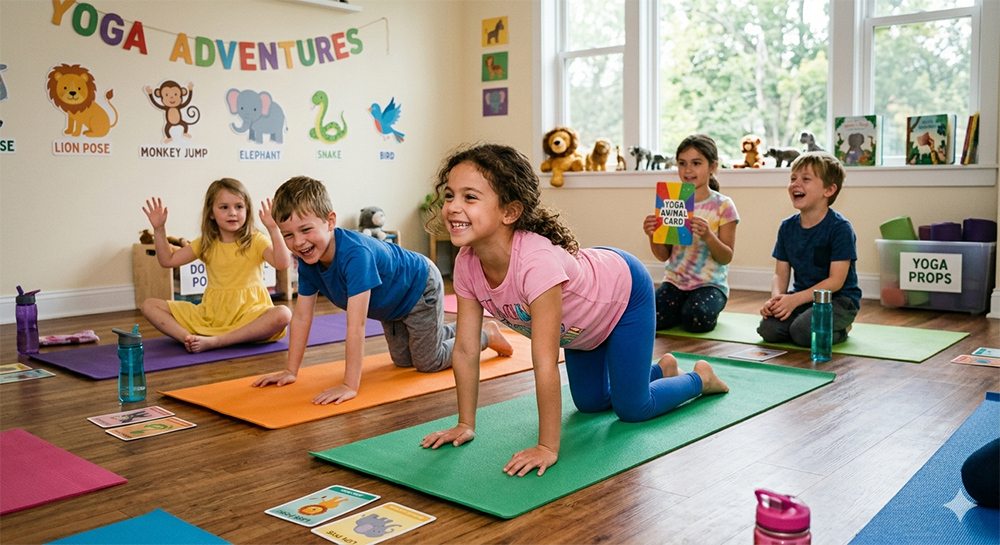
Best for: ages 4+
This creative storytelling game encourages imagination while bringing animal movements into the yoga class.
How to play:
Give each child an animal.
Start the story with: “Once upon a time there was a…” and let the first child add their animal.
Then pass the story around the circle, with each child adding one sentence before passing it along.
Encourage kids to act out their animals with movements or sounds as the story unfolds.
Why kids love it:
Kids love the freedom to be silly, creative, and unpredictable. The story often takes funny turns, and children enjoy seeing how their ideas become part of the group adventure.
Animal Yoga Games for Grade Schoolers:
A. Jungle Sound Shaker 🐯
Best for: ages 5+
A creative listening game that explores sound and imagination.
How to play:
Sit in a circle and close the eyes.
Choose a theme such as jungle, rainforest, or zoo.
One child begins making an animal sound to start a rhythm.
Each child adds a new animal sound to the growing jungle orchestra.
Why kids love it:
They enjoy creating silly animal sounds and building a playful soundscape together.
B. Om, Om Pose Game 🦆
Best for: ages 5+
This playful yoga game is inspired by the classic children’s game “Duck Duck Goose.”
How to play:
Children sit in a circle while one child walks around saying “Om… Om…”
Instead of saying “Goose,” the child calls out a yoga pose.
For example: “Om… Om… Downward Dog!”
Both children then move around the circle in that pose until one is tagged.
Why kids love it:
It mixes movement, laughter, and surprise while practicing fun animal poses.
C. Animal Memory Challenge 🐘
Best for: ages 8+
This game requires that children listen closely and use both memory recall skills as well as adaptive learning techniques.
How to play:
Choose four animal poses such as Giraffe, Frog, Downward Dog, and Cat.
Start by simply calling out the movement to allow children to familiarize themselves with the game
Once children are comfortable, switch two of the movements with each other (e.g., “Giraffe” = ”Frog”).
Once children figure out this new pattern, switch three of the movements. For example: Change two of the commands, e.g. "Giraffe"="Frog" and "Frog"="Giraffe." "Dog" and "Cat" remain the same.
Finally, switch all the commands so children must think quickly.
Why kids love it:
It turns yoga into a fun challenge that keeps them focused and engaged.
Animal yoga invites children to use their imagination while developing important skills like balance, coordination, and body awareness. Because the poses are playful and familiar, children naturally engage with them without feeling pressured to “do yoga.”
At Yogi Beans, playful movement and storytelling are at the heart of teaching yoga to children. By turning yoga into a game inspired by animals, kids can explore mindfulness, movement, and creativity all at once.
And sometimes, the best way to introduce yoga is simply to invite a child to roar like a lion, stretch like a giraffe, or rest quietly like a caterpillar in a cocoon.
For more animal-inspired kids’ yoga poses, check out our book “108 Awesome Yoga Poses for Kids” ! Inside, your children will discover plenty of playful poses that show how fun it can be to move their bodies. Let their imagination take the lead as they become a bouncing frog, a magical mermaid, or even a soaring rocket ship through simple and silly stretches. They’ll also learn calming breathing techniques to help when big emotions arise, with practices like Lion’s Breath or Sun Breath.
Let’s go on a yoga adventure!
Let your imagination soar as you become a bouncing Frog 🐸, a magical Mermaid 🧜 or a soaring Rocket Ship! 🚀
Connect with us!
Welcome Friends!
Yogi Beans is a yoga and wellness company for children. Come make the world a brighter place with us!
Teach Kids Yoga with Confidence & Joy!
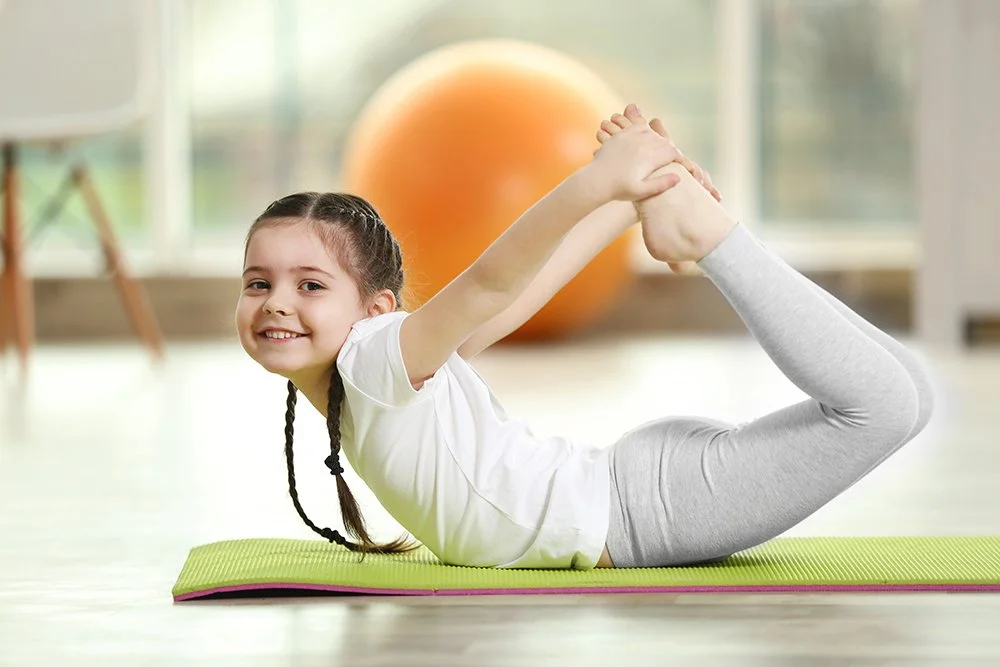
Hold It! Fun Ways to Help Kids Stay in Yoga Poses
Helping kids stay in a yoga pose can feel like trying to hold water in your hands.
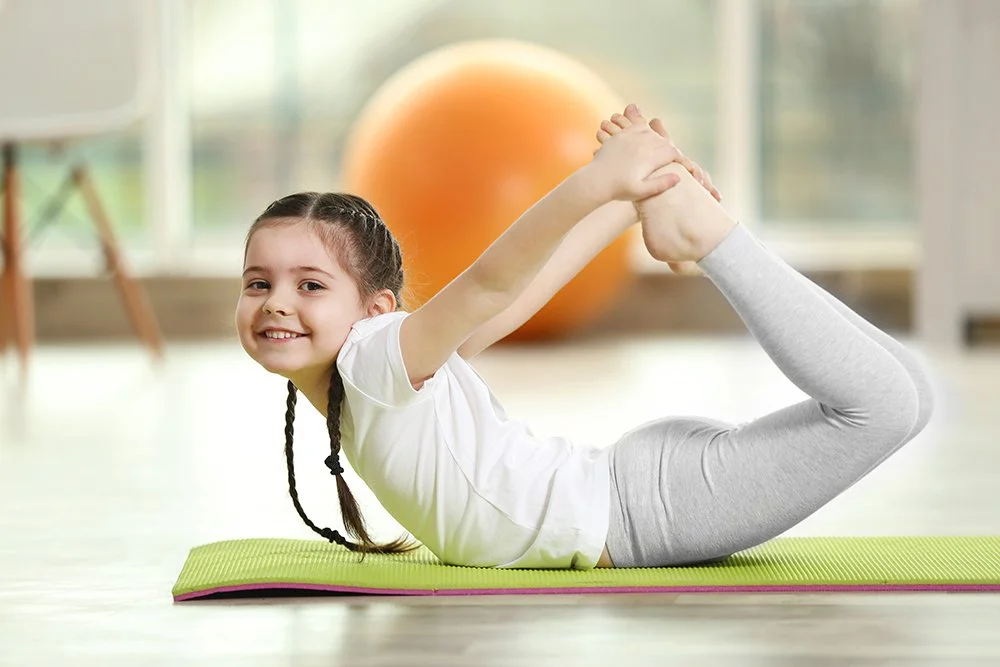
Helping kids stay in a yoga pose can feel like trying to hold water in your hands. They wiggle. They giggle. They look at their neighbor.
And that’s perfectly normal!
One of my favorite quotes as the founder of Yogi Beans, one of the leading kids’ yoga schools, is: “yoga is not a perfect, but an experience“
In fact, in kids yoga, the goal isn’t rigid stillness, it’s engaged presence. When holding a pose becomes playful, children naturally build strength, focus, and body awareness.
Here are creative, joy-filled ways to help kids stay in yoga poses a little longer, without turning it into a battle.
Why Holding Poses Matters in Kids Yoga?
When children stay in yoga poses, even just for one steady breath, something meaningful is happening beneath the surface.
Their muscles are working, growing stronger and more resilient as they learn to support their own bodies. At the same time, their proprioception develops: that subtle but essential sense of where their body is in space. As they wobble, adjust, and try again, they refine coordination and balance in a deeply embodied way. Holding a pose also nurtures emotional regulation.
There is often a moment of discomfort, impatience, or frustration, and in choosing to breathe through it rather than immediately collapse, children build tolerance for challenge. They strengthen their ability to concentrate, to focus on one point, one breath, one playful intention at a time.
But perhaps most importantly, they discover that they can stay with something, even when it feels hard. They experience themselves as capable. That quiet inner realization, I can do this!” is priceless. It follows them into the classroom, onto the playground, and into everyday moments that require patience, courage, and perseverance.
That’s a life skill far beyond the mat!
Fun Ways to Help Kids Stay in Yoga Poses
🎲 Turn it into a game
Children stay engaged when there’s a clear, fun objective.
Statue Game: “Freeze like a mountain!” If they move, they melt into a puddle and try again.
Yoga Dice: Roll a dice to decide how many breaths to hold.
Animal Challenge: Who can be the quietest lion of the jungle, in Lion Pose?
When holding becomes a mission rather than a command, motivation rises naturally.
🌬 Count breaths, not seconds
Instead of saying “Hold for 20 seconds,” try:
“Let’s take 3 dragon breaths.”
“Stay for 5 slow balloon breaths.”
Breath gives children something to do inside the stillness. It anchors their attention and builds emotional regulation.
🐶 Include their animal friends
Kids are natural animal lovers, and they’ll never get bored of them.
The good news? - There are many ways to include animals in your yoga class.
Here are some good ones:
Telling interesting facts about animals: While children hold a pose, share fun, age-appropriate facts about the animal they are embodying.
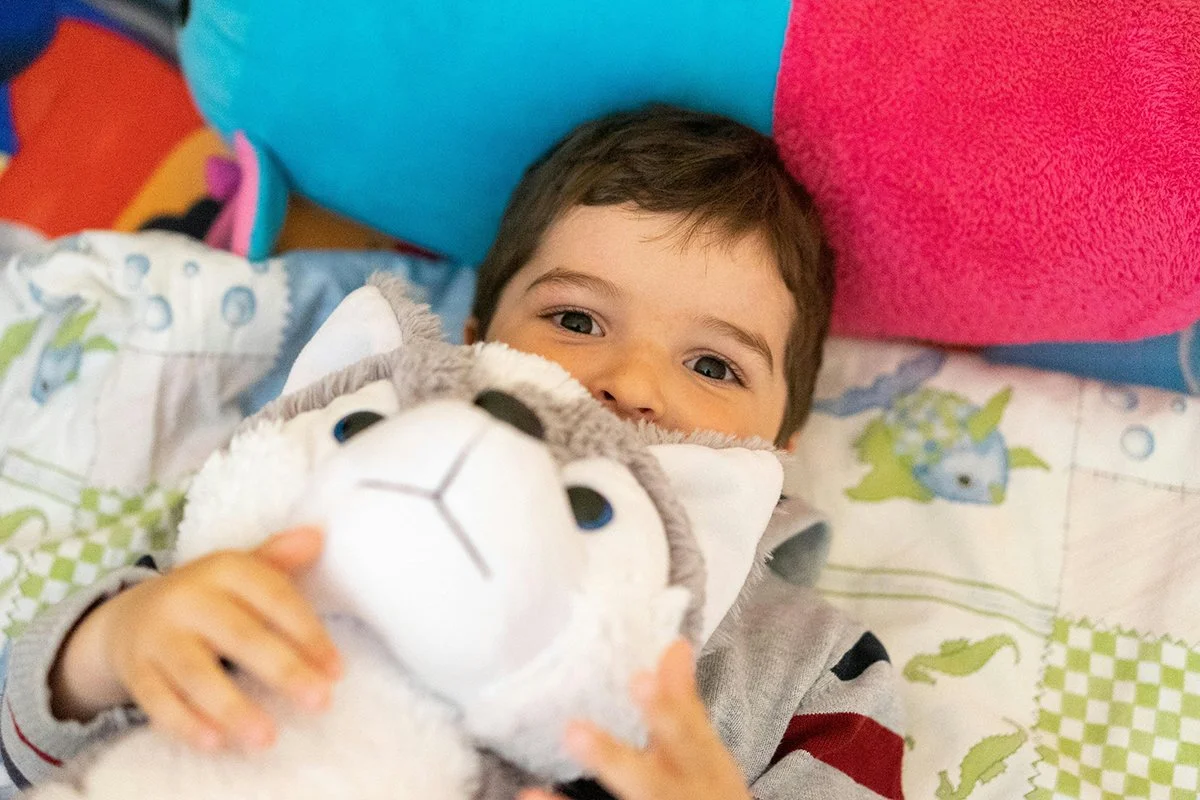
Balancing animal toys: Place small stuffed animals on the head, back, arms, legs, or tummy while children are in a pose.
Petting “Yoga Dogs” or “Yoga Bunnies”: Walk around the room and gently pat children in poses, praising them as a calm puppy or sweet bunny.
Incorporating animals not only makes holding poses a fun and imaginative activity, it also helps children connect more deeply with the animals and the natural world around them.
📖 Add storytelling
Kids can stay in a pose much longer when imagination is involved.
In Tree Pose, they aren’t balancing, they’re:
A tall oak in the wind
A coconut tree on a tropical island
A magical tree growing sparkly leaves
Story activates focus without pressure. This is beautifully illustrated in programs like Yogi Beans, where imagination is central to pose retention and engagement.
🎵 Use music or rhythm
Soft background music or gentle drumming creates a container for stillness.
You can say:
“Hold until the music changes.”
“Stay until the chime rings.”
Sound creates anticipation and structure, without constant verbal reminders.
🤝 Add partner poses
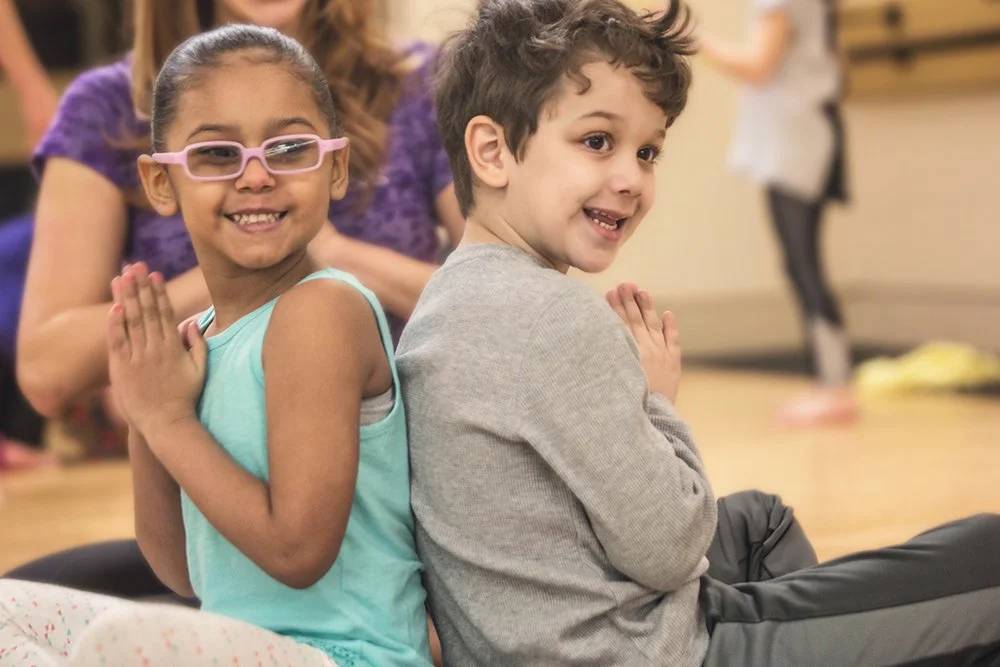
Connection increases commitment.
When children balance back-to-back or hold hands in a shared pose, they’re more likely to stay, because someone is counting on them.
Partner work builds:
Trust
Cooperation
Shared focus
And it transforms “holding” into teamwork.
🦸 Give them a superpower
Reframe holding as strength-building.
“Warriors are strong and steady.”
“Can you show me your superhero focus?”
“Your legs are charging up with power!”
Children love embodying characters. Holding becomes empowering rather than restrictive.
⏳ Use visual timers
Young kids especially benefit from seeing time.
A small sand timer
Counting beads
A finger countdown
When they see the finish line, they’re more willing to stay.
Most Importantly: Celebrate Effort, Not Perfection
By now, you probably know: “Yoga isn’t a perfect, it’s an experience”. What matters isn’t whether they can hold a pose perfectly, but that they enjoy themselves and have fun along the way!
Instead of pointing out every wobble or mistake, try offering words of gentle encouragement that acknowledge effort rather than perfection.
You might say, “I see you concentrating,” or “You stayed with it!” or “Your focus is growing.”
These small affirmations show children that their attention, persistence, and willingness to try are noticed and valued. By focusing on their effort rather than correcting every imperfection, you help them feel capable and confident. This kind of positive reinforcement nurtures intrinsic motivation, making them more willing to stay in poses longer and approach each practice with curiosity and joy, rather than pressure or fear of doing it “wrong.”
We hope you enjoyed reading this article!
Whether you’re already teaching yoga to children, a parent looking to practice with little ones, or simply curious about bringing yoga into playtime, there are plenty of ways to get started. To help you along the journey, we’ve created a range of resources designed to make kids’ yoga fun, engaging, and effective : from our hands-on kids’ yoga book to our detailed practice blueprint, and even our yearly certification program for those who want to dive deeper. No matter where you are on your journey, we’ve got the tools and guidance to support you every step of the way.
Let’s go on a yoga adventure!
Let your imagination soar as you become a bouncing Frog 🐸, a magical Mermaid 🧜 or a soaring Rocket Ship! 🚀
Connect with us!
Welcome Friends!
Yogi Beans is a yoga and wellness company for children. Come make the world a brighter place with us!
Teach Kids Yoga with Confidence & Joy!
Easy Yoga Tricks to Calm Kids’ Nervous System
Children’s nervous systems are sensitive, fast-moving, and easily overwhelmed.
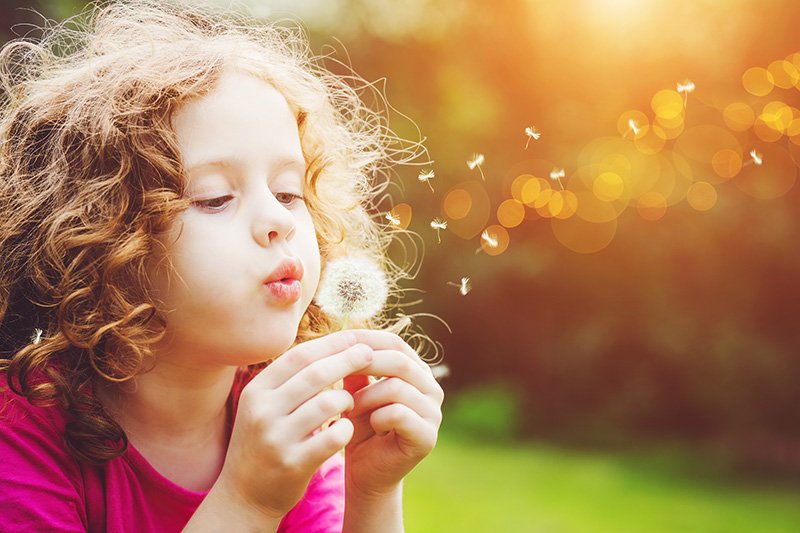
Children’s nervous systems are sensitive, fast-moving, and easily overwhelmed. Big emotions, transitions, noise, tiredness, or too much stimulation can quickly tip them into stress or agitation.
The good news?
A few simple yoga-based tricks can help children regulate their nervous system almost instantly, without needing long explanations, perfect silence, or a yoga mat.
At Yogi Beans, a leader in kids’ yoga and wellness, we see every day how these simple practices help children feel safer, calmer, and more connected. And because our mission is to share the magic of yoga with as many children as possible, we’re sharing them with you today.
These practices work best when offered as playful invitations, not as tools to “fix” a child. Think of them as ways to help kids come back to their body, their breath, and a sense of safety.
Breathing exercises to calm children’s nervous system
Breathing is one of the fastest ways to calm the nervous system, for kids and adults alike. Keep it light, visual, and fun.
A. Balloon Breathing
Invite your child to place one hand on their belly and imagine a balloon resting inside.
As they inhale through the nose, the balloon slowly fills and rises.
As they exhale through the mouth, the balloon gently deflates. You can invite your child to make a long, soft “schhhhh…” sound, letting the belly empty completely.
This slow, deep breathing sends a message of safety to the nervous system, helping the body soften and settle.
If your child has a stuffed animal nearby, they can place it on their belly and watch it rise and fall, imagining they’re helping their little companion relax too.
❤️ Best for: anxiety, restlessness, before sleep
B. Lion’s Breath
This one is perfect for releasing frustration or big emotions.
Invite your child to take a deep breath in through the nose.
As they exhale through the mouth, encourage them to open wide, stick out the tongue, and make a strong “haa” sound.Let the face relax afterward, noticing how the body feels once the breath has been released.
You can make it playful by imagining you’re both lions letting out a big, freeing roar.
❤️ Best for: anger, tension, emotional overload
2. Yoga practices to help your children relax.
Simple postures that bring the body closer to the ground help children feel supported and contained.
A. Legs against the wall
This posture has a deeply calming effect on the nervous system and helps the body unwind after a busy or stimulating day :
Invite your child to lie down on their back and gently rest their legs up against a wall, couch, or bed.
Arms can relax by the sides, palms facing up, or resting on the belly.
Encourage slow, natural breathing and a moment of stillness.
❤️ Best for: overstimulation, fatigue, before bedtime
B. Child Pose
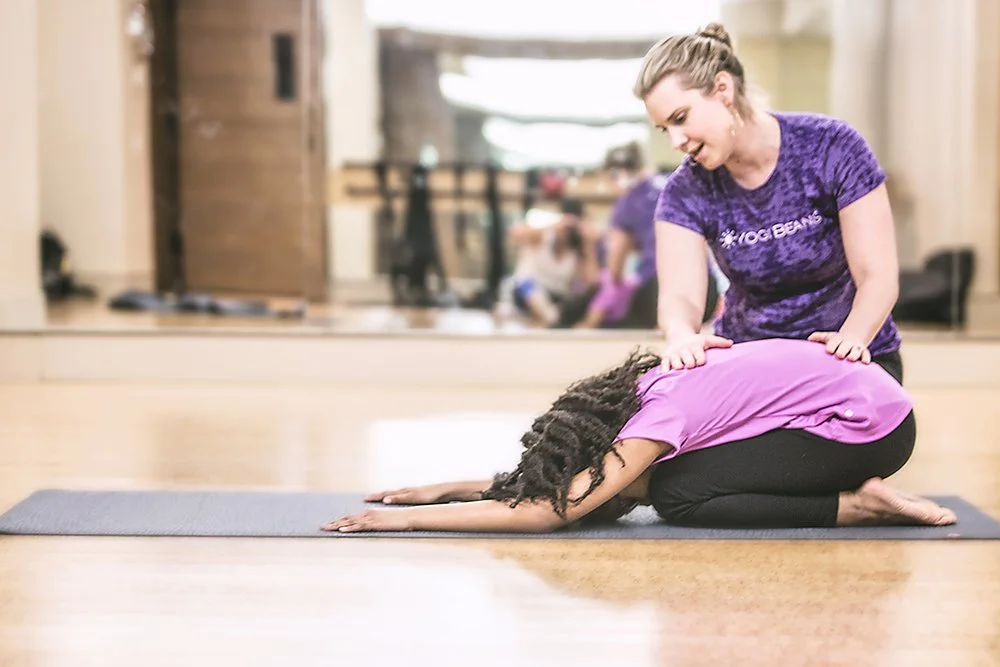
Child’s Pose is well known for creating a deep sense of comfort and safety, allowing emotions to soften and settle naturally. Here is how to guide it:
From hands and knees, invite your child to slowly sit back onto their heels. The forehead can rest on the floor, a cushion, or folded arms.
You can describe it as “becoming a small, safe ball.”
❤️ Best for: emotional overwhelm, need for comfort
B. Butterfly
Butterfly, or Baddha Konasana, helps calm the body while keeping the mind gently awake and present.
Invite your child to sit down and bring the soles of the feet together, letting the knees gently open to the sides.
Encourage slow, relaxed movements of the legs, like butterfly wings softly opening and closing. Breathing can stay calm and natural.
You can add slow breathing or a calming story while holding the pose.
❤️ Best for: calming the body while staying alert
C. Shaking to Uttanasana
This combination of movements helps release built-up tension and brings a feeling of grounding and calm.
Invite your child to stand and gently shake the body (arms, legs, hands, and shoulders).
Let the shaking be free and playful, releasing any extra energy.
Then slowly invite them to fold forward, letting the head and arms hang down toward the floor.
❤️ Best for: agitation, stress, transitions
3. Yoga Tools
A. Essential oils or flowers
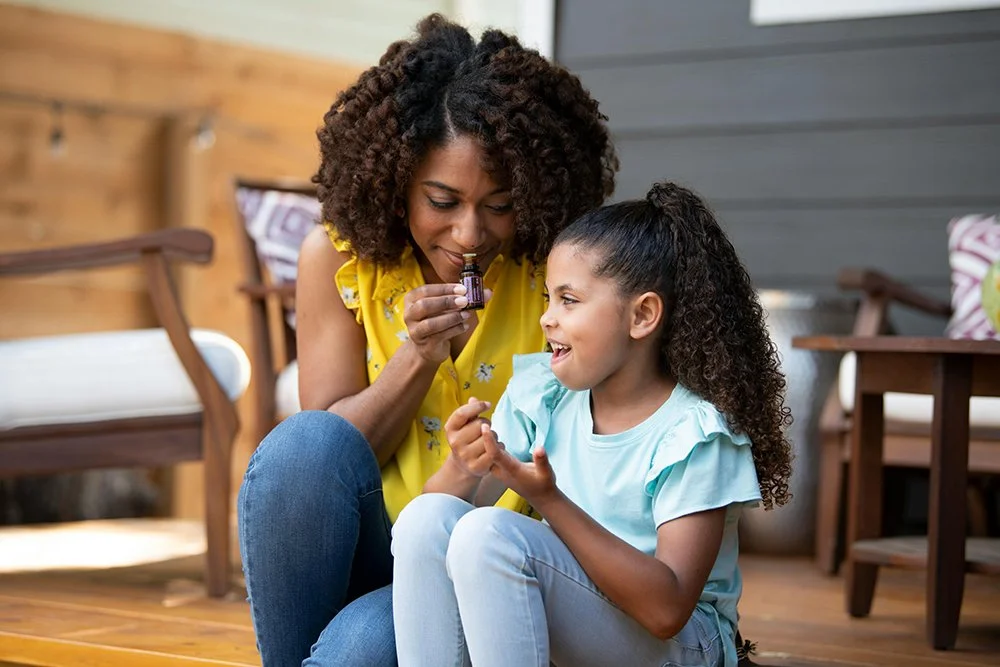
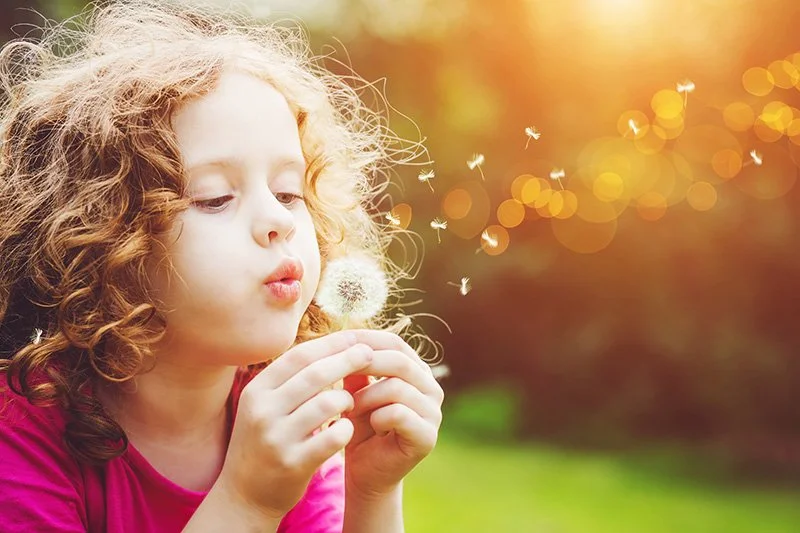
It’s no myth that essential oils can gently bring us back to the present moment, sometimes even transporting us to a place that feels calm and familiar. A soothing scent can quickly help the nervous system relax and feel safe.
Choose a gentle, child-friendly essential oil, such as lavender, orange, or chamomile.
Invite your child to smell it softly from a distance or from a cotton ball.
Always ask if the scent feels pleasant and comforting.
While certain scents are especially supportive in specific moments (lavender or chamomile for calming, for example), don’t hesitate to invite your child to smell real flowers too. Not only does this bring them fully into the present moment, it also deepens their connection with nature and can spark a quiet sense of wonder.
❤️ Best for: anxiety, stress
B. Using your 5 senses
This simple practice helps bring attention back to the here and now, offering grounding and reassurance when emotions feel big.
Invite your child to gently connect with the present moment by exploring their senses :
You can gently guide your child to notice something they can see : a color they like, a shape, or an animal.
Something they can touch, such as a texture or the feeling of the ground beneath them.
Something they can hear, like a passing car or a bird.
Something they can smell, noticing any scent in the air.
And finally, something they can taste, perhaps the lingering taste of the last thing they ate.
❤️ Best for: anxiety, panic, emotional shutdown
A Gentle Reminder
These yoga tricks are not meant to control children’s emotions ; but to support their natural ability to self-regulate.
The most important ingredient isn’t the technique itself, but the presence and calm energy of the adult offering it.
Small moments, practiced regularly, can make a big difference.
If you’re a teacher or a parent wanting to bring yoga more regularly into children’s lives, explore our different offerings, from kids’ yoga books to kids’ yoga courses. Everything is designed to support you gently and confidently on this journey.
Let’s go on a yoga adventure!
Let your imagination soar as you become a bouncing Frog 🐸, a magical Mermaid 🧜 or a soaring Rocket Ship! 🚀
Connect with us!
Welcome Friends!
Yogi Beans is a yoga and wellness company for children. Come make the world a brighter place with us!
Teach Kids Yoga with Confidence & Joy!
10 Best Themes for your Kids' Yoga Classes
Children are full of creativity and curiosity, and to keep them engaged, we need to match their sense of wonder!
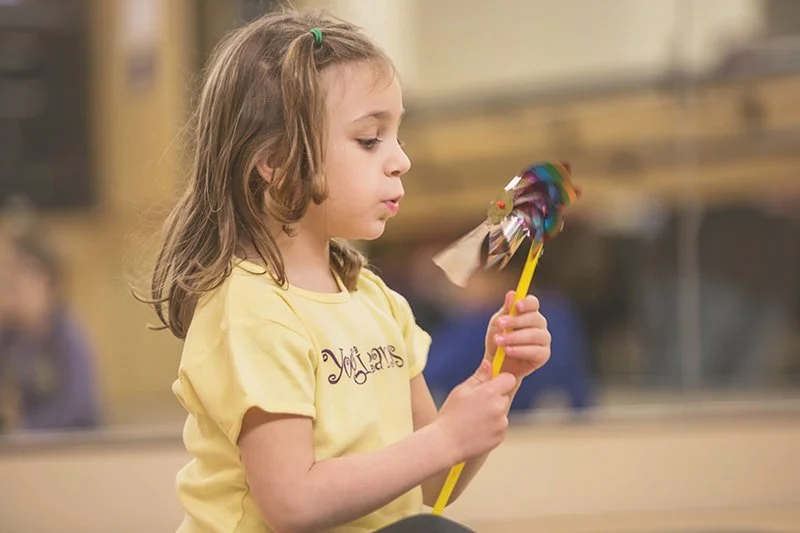
Class after class, finding fresh and imaginative kids’ yoga themes can become a real challenge. Children are full of creativity and curiosity, and to keep them engaged, we often need to match their sense of wonder!
For over 20 years, Yogi Beans has been guiding new and aspiring kids’ yoga teachers on their professional journey. As one of the leading kids’ yoga schools, we make sure our trainees receive the most playful, effective, and developmentally appropriate tools to confidently lead their classes.
That’s why we’ve gathered 10 of the best kids’ yoga themes to inspire your upcoming sessions. From seasonal adventures to everyday discoveries, these ideas will help you bring mindfulness and fun into every pose. Let’s spark imagination, one theme at a time!
I. Why Choose a Theme for Your Kids' Yoga Class?
A themed class isn’t just a cute addition; it’s what turns yoga into an immersive and meaningful experience for children!
Kids learn best when their imagination is activated. Stories, characters, and playful narratives help them engage with their bodies, their breath, and the world around them in a way that feels natural and exciting. With the right theme, every posture becomes a moment of discovery!
Here’s why themes make such a difference:
Keep them engaged: Kids stay curious and excited when the class feels like an adventure.
Support learning: You can connect yoga with educational topics like nature, geography or science.
Encourage self-expression: Stories and role-play allow children to embody characters and feelings.
Make mindfulness fun: Breathing exercises and relaxation become part of the narrative.
Build meaningful connections: Children can relate their own environment, at home or at school, to the yoga concepts you introduce.
Increase participation: For reluctant or anxious kids, using a favorite theme can be the perfect way to welcome them into the class.
A well-chosen theme can completely transform the atmosphere in the room, keeping little yogis grounded, giggling, and open to trying new things. It invites them to move with purpose, breathe with joy, and develop awareness of themselves and others… all while having so much fun they don’t even realize how much they’re learning.
II. The 10 best themes you should try once
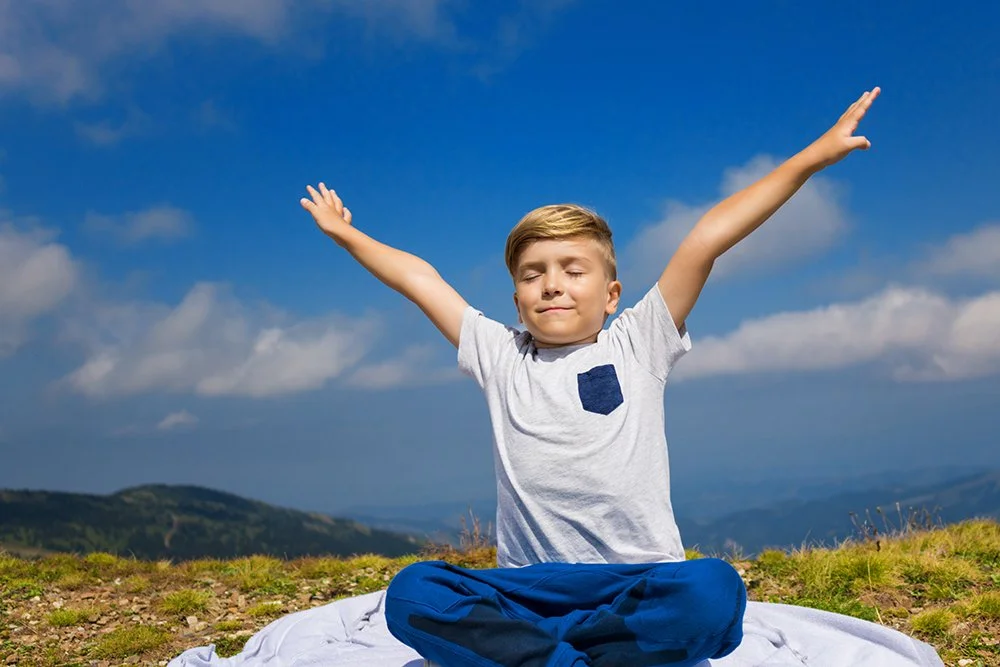
At Yogi Beans, we believe a thoughtful theme can turn a simple yoga class into a rich and memorable experience, for both children and their teachers. For more than 20 years, we’ve been supporting young yogis and training future kids’ yoga instructors with playful, effective, and developmentally informed tools.
If you’re looking for more inspiration, or guidance on your professional journey, explore our certification and mentorship programs designed just for kids’ yoga teachers.
Now, let’s dive into 10 creative themes to try with your young yogis:
1. Outer Space Kids’ Yoga Theme
Blast off into a cosmic adventure! An outer space theme encourages children to explore the universe through movement, from stretching like a star to balancing like astronauts floating on the moon. To take this theme even further, you can tie in the value of the unknown, and how going into outer space is stepping into something mysterious and new. You can introduce breathing exercises like taking slow “Star Breaths” before launch, and finish with a peaceful “cosmic nap” while imagining sparkling constellations above. This theme is perfect for sparking curiosity and learning fun space facts along the way.
✨ Adventure Highlight :
Kids usually love pretending to launch into space with a fun “Rocket Pose” countdown. (You can find this pose, and many more, in our book 108 Awesome Yoga Poses for Kids!) Start in Chair Pose with arms reaching up and palms together like the tip of a rocket. Count down from 10, and when you reach 1… blast off! Let them zoom around the room to release energy, then call “Freeze!” and guide them back to stillness so they can recenter and feel grounded again.
2. Earth Kids’ Yoga Theme
An Earth theme invites kids to connect with nature and become protectors of the planet. Each pose can represent an element : tall mountains, flowing rivers, strong trees, and gentle wind. Breathing practices can teach respect for the air we share, while mindfulness activities encourage gratitude for the ground beneath our feet. This theme blends environmental awareness with grounding, stabilizing yoga movements.
✨ Adventure Highlight :
Try a “Thank You, Earth” Pass. Invite the children to sit together in a circle and pretend a soft ball is our planet. As they carefully pass it around the circle, each child shares one thing they love about Mother Earth. You can guide them by saying:
“We care for the Earth just like we care for this ball, noticing it, handling it thoughtfully, and making sure everyone gets a turn to hold and appreciate it.”
3. Kindness & Friendship Yoga Theme
Kids learn powerful social-emotional skills when they practice kindness on and off the mat. Through group poses, partner breathing, and heart-centred mindfulness, children discover how connection feels in their bodies. You can introduce discussions around friendship, emotions, and compassion, making yoga a safe space to build confidence and empathy. This theme supports teamwork and helps friendships blossom.
✨ Adventure Highlight:
Enhance this class by introducing a Loving-Kindness meditation. You can play our beautiful Loving-Kindness Meditation on Insight Timer during Savasana and invite the children to relax deeply, letting the gentle words fill their hearts and minds.
4. Garden Kids’ Yoga Theme
This colorful theme lets children grow like flowers, crawl like bugs, and sway like tall grass in the wind. A garden class invites sensory exploration, imagining textures, colors, and creatures. It’s a great opportunity to talk about growth, patience, and caring for living things.
✨ Adventure Highlight:
Share one of our favorite quotes:
“Your mind is a garden, your thoughts are the seeds. You can plant flowers or you can plant weeds.”
Then ask your students what they think it means.
What thoughts help beautiful flowers grow?
And what thoughts might turn into pesky weeds?
It’s a simple, memorable way to help kids understand that their thoughts influence how they feel, and how they show up in the world.
5. Gratitude Kids’ Yoga Theme
A gratitude theme teaches kids to appreciate themselves, others, and the world around them. Each movement can highlight thankfulness, hands at heart for appreciation, open arms for receiving good things, and grounding poses for recognizing support. Journaling or sharing circles can be added to help children identify moments they are grateful for. It’s a beautiful way to nurture positive mindset and self-esteem.
✨ Adventure Highlight:
Finish the class with a gratitude circle. Each child writes one thing they are thankful for on a card. If they want to, they can place their card in the center of the circle or in a “gratitude bowl.” Then go around and invite each child to pick a card and read it aloud, so the whole group gets to listen, reflect, and share in the gratitude together.
6. Animal Safari Yoga Theme
Let little yogis unleash their playful side as they prowl through the savannah! Animal poses, like lion, cobra, and giraffe, become storytelling moments that encourage children to embody strength, flexibility, and courage. This theme is energetic and perfect for building motor skills, releasing energy, and having lots of giggles while learning animal facts!
✨ Adventure Highlight:
Kids love to roar like a lion. Introduce Lion’s Breath by inhaling deeply through the nose, then opening the mouth wide, sticking out the tongue, and letting out a big “ROAR” on the exhale. You can tell children that Lion’s Breath is a helpful way to let strong feelings out, and it can make their anger feel a little bit smaller.
7. Ocean Discovery Yoga Theme
Dive deep into movement inspired by the sea! Kids can float like jellyfish,, glide like dolphins, and stretch like starfish. Ocean sounds and wave-like breathing help calm the nervous system and reinforce rhythm in movement. This theme also opens conversations about protecting marine life and keeping our oceans clean, all through a soothing underwater adventure.
✨ Adventure Highlight:
Kids love pretending to go surfing in the ocean. Invite the mat to become their surfboard and practice flowing from Warrior 2 into Reverse Warrior, imagining they’re riding a wave. Music from The Little Mermaid, Moana, or even the Beach Boys (“Wipe Out!”) can add to the fun and bring the whole ocean adventure to life.
8. Superhero Kids’ Yoga Theme
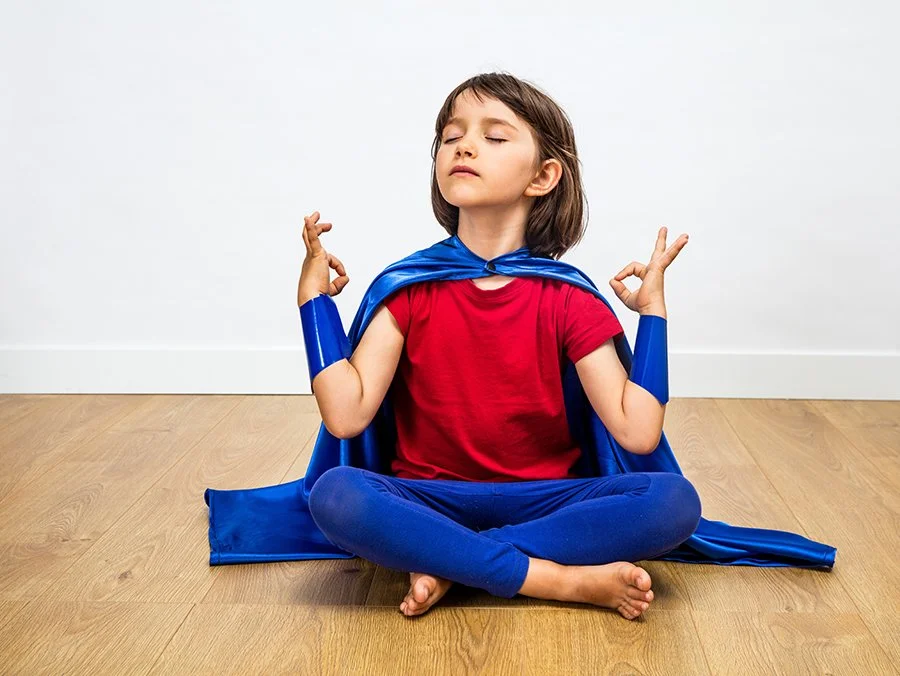
Activate courage and confidence with a superhero yoga class! Each child discovers their unique “superpower”, like bravery, kindness, or creativity, and expresses it through strong, empowering poses. Breathing becomes a tool for managing big feelings, while mindfulness turns into a moment to recharge. This theme helps kids feel capable, bold, and ready to take on the world.
✨ Adventure Highlight:
Core-centering poses like Plank Pose, balancing poses, and simple arm balances help children build inner strength and connect with their personal power. This practice provides a significant boost to their self-confidence by strengthening their body from the inside out.
9. Transportation Yoga Theme
Planes, trains, bicycles, and boats, a transportation theme keeps the class dynamic and highly imaginative. Kids move through different levels of space: high-flying balances, grounded wheels, and rocking boats. You can integrate directional awareness, forward, backward, fast, and slow, making this theme excellent for spatial learning and coordination skills.
✨ Adventure Highlight:
“Airplane Pose” is always exciting. Start by practicing takeoff with your back foot still on the floor. Then lift into flight, find your balance, and gently land your plane by bringing both hands down to the floor while keeping your leg lifted - an added challenge kids love!
10. Weather & Seasons Yoga Theme
This theme teaches children that change is natural, in nature and within themselves. Poses can reflect sunny stretches, gentle rain, swirling wind, and cozy snowflakes settling to the ground. Seasonal breathing and visualizations help children connect with cycles, transitions, and emotions. It’s a gentle way to explore mindfulness and resilience through movement.
✨ Adventure Highlight:
Take an internal weather forecast and invite the kids to notice and share their weather inside. Are they feeling sunny, foggy, stormy, or calm? Use this moment to remind them that, like real weather, our thoughts and feelings are impermanent and always changing. Clouds move through the sky, and thoughts move through our minds they come and go.
We hope you enjoyed reading this article, and maybe even shared a little giggle or two while imagining some of these fun themes! As you’ve probably discovered, a thoughtful kids’ yoga theme can make a huge difference in engagement, focus, and joy.
If you’re ready to take your teaching to the next level, Yogi Beans is here to support you! Our Kids’ Yoga Teacher Certification and mentorship programs provide the tools, guidance, and inspiration you need to become a confident, creative, and impactful kids’ yoga teacher.
Bring magic, mindfulness, and movement into every class!
Let’s go on a yoga adventure!
Let your imagination soar as you become a bouncing Frog 🐸, a magical Mermaid 🧜 or a soaring Rocket Ship! 🚀
Connect with us!
Welcome Friends!
Yogi Beans is a yoga and wellness company for children. Come make the world a brighter place with us!
Teach Kids Yoga with Confidence & Joy!

Play with contrast
One of the most helpful tools for getting kids to cooperate during class is to play with CON/TRAST
Bean TIP: Play with Contrast
One of the most helpful tools I’ve discovered for getting kids to cooperate during class is to play with CON/TRAST. If you want kids to stand still in Mountain pose, for example, first let kids wiggle around and jump. If you want kids to be quiet while repeating a mantra in their head first let them say it out loud in a BIG VOICE.
Using contrast not only engage kids and fosters cooperation in learning, it’s use as a mindful anchor of attention can help reduce an overly heightened stress response in thoughts and feelings. This suggestion comes from Susan Kaiser Greenland in her book Mindful Games: Sharing Mindfulness and Meditation with Children, Teens, and Families.