

How to Explain Yoga to a Child: A Guide for Parents and Teachers
Yoga, with its calming influence and myriad health benefits, is a wonderful practice for children.

Yoga, with its calming influence and myriad health benefits, is a wonderful practice for people of all ages, including children. However, explaining yoga to a child requires a gentle and engaging approach that aligns with their natural curiosity and imagination.
Embarking on a journey to explain yoga to children can be a delightful and enriching experience.
In Sanskrit, the ancient language of India, the word "yoga" translates to "union." But what does this union signify? Why do we meditate and do all these poses?
Take a ride with us to discover the best and most fun ways to explain yoga to kids! Yogi Beans is a leading kids' yoga company that offers yoga lessons and wellness education to kids, parents and teachers.
1. Start with a simple definition
Children understand best when things are kept simple. Start with an easy explanation in one sentence.
One of Yogi Beans’ most favorite definition of yoga is:
“Yoga makes you feel good: it is exercise for your body, mind and heart”
This definition helps children understand that yoga isn't just about physical movement; it also nurtures their emotional and mental well-being.
2. Make it fun from the start
Children learn best through play and fun! While explaining yoga to kids, it’s important to use language that sparks their interest. You could tell them yoga is a fun way to move their bodies and feel great. You could say:
"Yoga is like a special game where we move our bodies in different shapes to feel strong, happy, and calm."
This definition sets the stage for children to see yoga as a fun activity rather than a structured exercise routine.
3. Use storytelling and imagination
Children have vivid imaginations and love stories! Use this to your advantage by incorporating storytelling into your yoga sessions. Create imaginative scenarios for different poses. For example:
"Imagine you're a tall, strong tree with roots deep in the ground and branches reaching up to the sky. This is called Tree Pose. And now an Eagle comes to rest on your branches, let’s do Eagle pose!"
By turning yoga poses into elements of a story, you make the experience engaging and relatable.

Interested in learning how to practice yoga with children? Check out our on-demand online training designed for anyone wanting to share yoga with the kids in their life! Our development course allows you to learn at your own pace, providing you with the skills to practice yoga with children in a safe and fun environment.
4. Incorporate animal yoga poses
Children relate well to animals. They naturally have a strong connection with them and enjoy exploring this connection. Indeed, explaining yogi concepts through animal poses can make the practice more relatable and fun. Name and demonstrate animal poses:
Cat Pose: "Pretend you're a cat stretching its back."
Cobra Pose: "Now you're a snake; lift your head to look around."
Frog Pose: "Can you squat like a frog? Ready to jump?"
5. Give children a bit of history
At Yogi Beans, we encourage you to share some of yoga's stories with your child, even if it's just a short line. To keep things interesting, engage them by asking questions. You might ask if they've heard of the continent of Asia, or a country called India. Explain that this is where yoga originated from.
If your child is curious to learn more, you can add that yoga began in India thousands of years ago, and many of the words used in yoga classes come from an ancient language called Sanskrit.
If your little beans are still curious, you can introduce some yoga philosophy. Explain that yoga is about uniting the body, mind, and heart to express our true selves. The self is the unchanging part of us that makes each of us special!
6. Explain the benefits of yoga in kid-friendly terms
Instead of talking about flexibility or mindfulness, try using terms that children can better understand such as:
Feeling Happy: "Yoga helps us feel happy and less grumpy."
Strong Bodies: "Yoga can make our muscles strong like a superhero."
Calm Minds: "Yoga can help us feel calm and not worried."
7. Make it interactive
A good way to introduce yoga to children is to engage them in simple and interactive yoga activities and games (e.g., animal poses, stories, dance, etc.)
Breathing is a fundamental part of yoga. You can teach children basic breathing exercises in a playful manner too:
Bunny Breath: "Pretend you're a bunny and take quick little sniffs like you're smelling a flower."
Balloon Breath: "Imagine your tummy is a balloon. Take a big breath in and blow it up; then let the air out slowly."
8. Introduce relaxation and mindfulness
Introducing children to relaxation can be both fun and calming. Describe it as a special "quiet time" where children get the opportunity to lie down, listen to soothing music, and imagine a peaceful place. Encourage children to think of relaxation as a way to rest both their bodies and minds. You can explain it like this: “Relaxation is a quiet time for your body and mind. It's when you lie down, listen to soft music, and imagine you're in a calm, happy place.”
Be creative and use guided imagery to make the experience more engaging. Lead them through a simple exercise such as: "Close your eyes and take a deep breath. Imagine you're lying on a warm, sandy beach. Feel the sun on your skin and hear the gentle waves of the ocean. Or picture yourself floating on a fluffy cloud, feeling light and free as you drift through the sky." Using vivid descriptions and imagery helps children fully immerse themselves in the experience, making relaxation more effective and enjoyable.
9. Use visual aids
Children are visual learners. Use books, videos, and posters that illustrate yoga poses and practice sequences. There are many children’s books that incorporate yoga stories and poses, making it an enjoyable learning experience.
Looking for a fun and creative kids’ yoga book? Yogi Beans’ own masterpiece, 108 Awesome Yoga Poses for Kids, offers tons of playful yoga positions that will show you and the children in your life how to move your bodies in fun and novel ways.

Let’s go on a yoga adventure!
Let your imagination soar as you become a bouncing Frog 🐸, a magical Mermaid 🧜 or a soaring Rocket Ship! 🚀
10. Foster connection
Yoga transcends personal practice; it's about building connections and fostering unity!
Introduce children to the concepts of community, compassion, and kindness through yoga. Demonstrate how yoga can help them connect with others, appreciate nature, and discover their inner selves. Encourage them to share their experiences, listen to one another, and offer support throughout their yoga journey!
Conclusion
Explaining yoga to a child is all about making it fun, engaging, and relatable. By using simple language, storytelling, animal poses, and interactive activities, you can introduce yoga as a delightful and beneficial practice. Encouraging them to explore yoga will not only help them grow physically, but it also teaches them valuable skills for positive emotional well-being, self-regulation and self-awareness.

Connect with us!
Welcome Friends!
Yogi Beans is a yoga and wellness company for children. Come make the world a brighter place with us!
Teach Kids Yoga with Confidence & Joy!
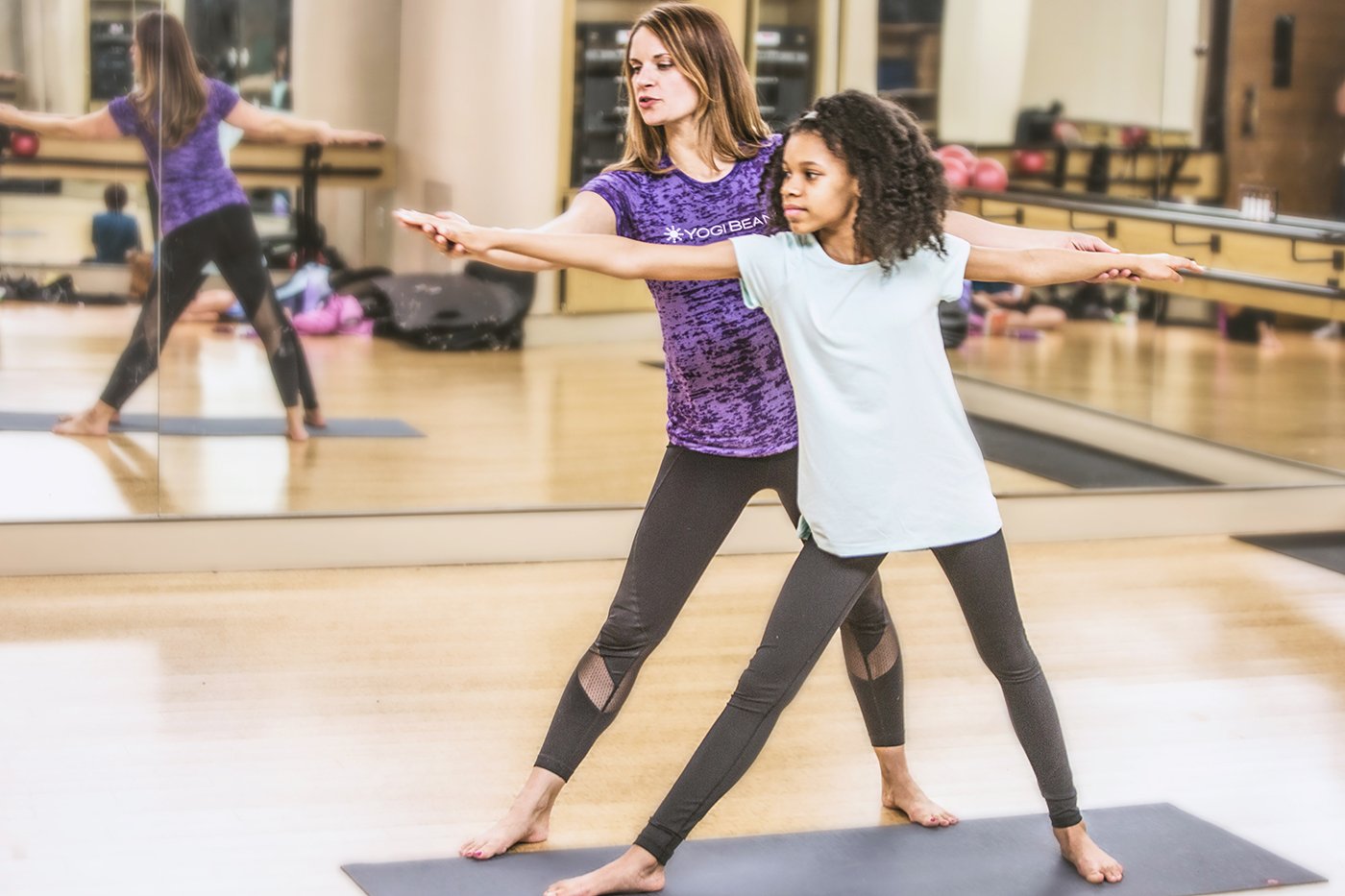
The Ultimate Guide to Plan the Best Kids Yoga Lesson
Learn how to prepare a super fun kids’ yoga class

Would you like to plan the best kids' yoga lesson filled with exciting poses, engaging games, and heaps of fun?
You’re in luck because, at Yogi Beans, we have crafted the perfect guide to assist you in creating a fantastic yoga class for children.
Designing a kids' yoga lesson requires a thoughtful approach to engage and inspire young minds. At Yogi Beans, we've been providing yoga teacher training and guiding parents and childcare professionals on the safest and most enjoyable ways to engage children in yoga.
Here's a comprehensive guide to help you plan the best kids' yoga lesson:
How do you structure a yoga class for kids?
1. Welcome them with Warmth and Excitement (10 minutes):
Greet the children with a lot of enthusiasm.
Open the class with a circle.
Use a simple icebreaker activity to help them get comfortable and engaged: Play some music and invite them to move their bodies and shake out their wiggles for a couple of minutes.
Once everyone had a bit of fun and feels more relaxed and connected, you can start the class with a tune-in activity such as ringing a bell, singing a song or saying the sound of OM
2. Introduction to Yoga (1-3 minutes):
Briefly explain what yoga is in a child-friendly manner.
Share the benefits of yoga, such as flexibility, balance, and relaxation.
3. Breathing Exercises (5 minutes):
Teach simple and playful breathing exercises (lion’s breath).
Relate breath awareness to calming the mind and body.
4. Warm-Up (5 minutes):
Start with gentle warm-up exercises to prepare their bodies for movement (animal walks, neck rolls…).
Incorporate activities like stretching, reaching, and light cardio movements.
Teach Sun Salutations
Our Yogi Beans song, Mountain Moves, which is found wherever music is streamed, is great for a simple warm up!
Listen to Yogi Beans Music on Spotify or Apple Music
5. Theme Introduction (1-3 minutes):
Introduce the theme or the “yoga adventure” for the session (animals, superheroes…).
Connect the theme to the benefits of specific yoga poses. (eg: Outerspace theme can teach us about the unknown)
6. Yoga Poses (10 minutes):
Demonstrate and guide children through a series of age-appropriate yoga
Incorporate poses related to the chosen theme.
Feeling a bit low on inspiration? No worries! We've whipped up a fantastic book packed with over 108 lively kids' yoga poses, each paired with a story idea. Give it a chance, this book might just become your ultimate sidekick in the awesome adventure of teaching yoga to kiddos!
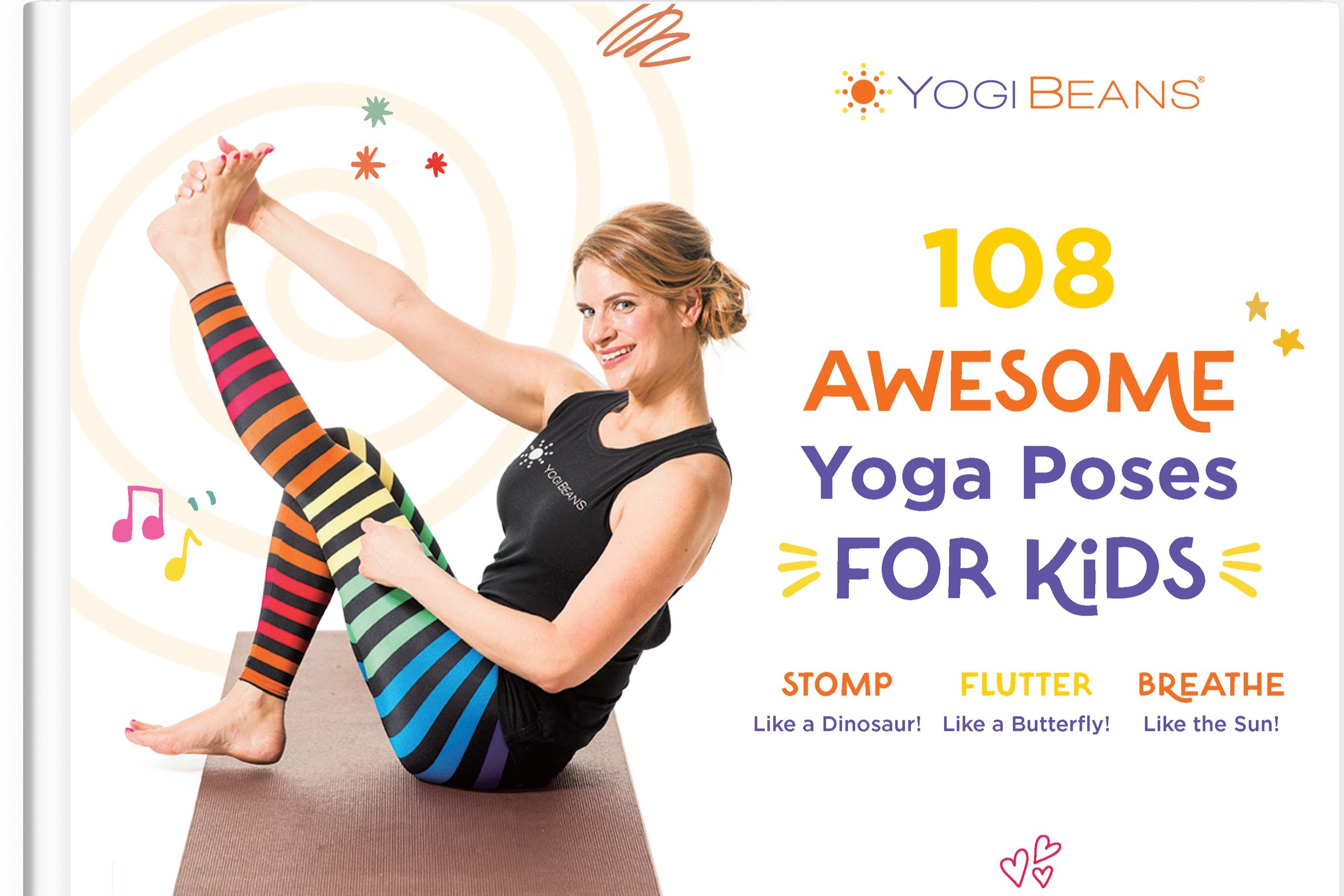
Let’s go on a yoga adventure!
Let your imagination soar as you become a bouncing Frog 🐸, a magical Mermaid 🧜 or a soaring Rocket Ship! 🚀
7. Games (15 minutes):
Integrate yoga-themed games that require focus and concentration.
Include unifying activities that promote collaboration and teamwork.
Try incorporating one high-energy game and one low-energy game
Need more yoga games? Our online trainings will teach you many fun mindful games that can be incorporated into your children’s yoga classes.
8. Creative Expression (10 minutes):
Allow children to express themselves through art or movement.
Incorporate a creative element related to the yoga theme (dance, drumming, drawing, and journaling prompts for older children, etc.)
9. Relaxation/Mindfulness (5 minutes):
Guide children through a brief relaxation or mindfulness exercise.
Use props like soft music or imagery to enhance the experience.
Always end with the final resting pose Savasana
10. Closing and Gratitude (5 minutes):
Gather the children for a closing circle.
Express gratitude, recap the session briefly, and encourage sharing.
Keep this in mind—it's all about finding the groove between order and playfulness. Strike that sweet balance where structure meets flexibility, leaving plenty of space for creativity and the unexpected joys sparked by the kids' reactions and interests!
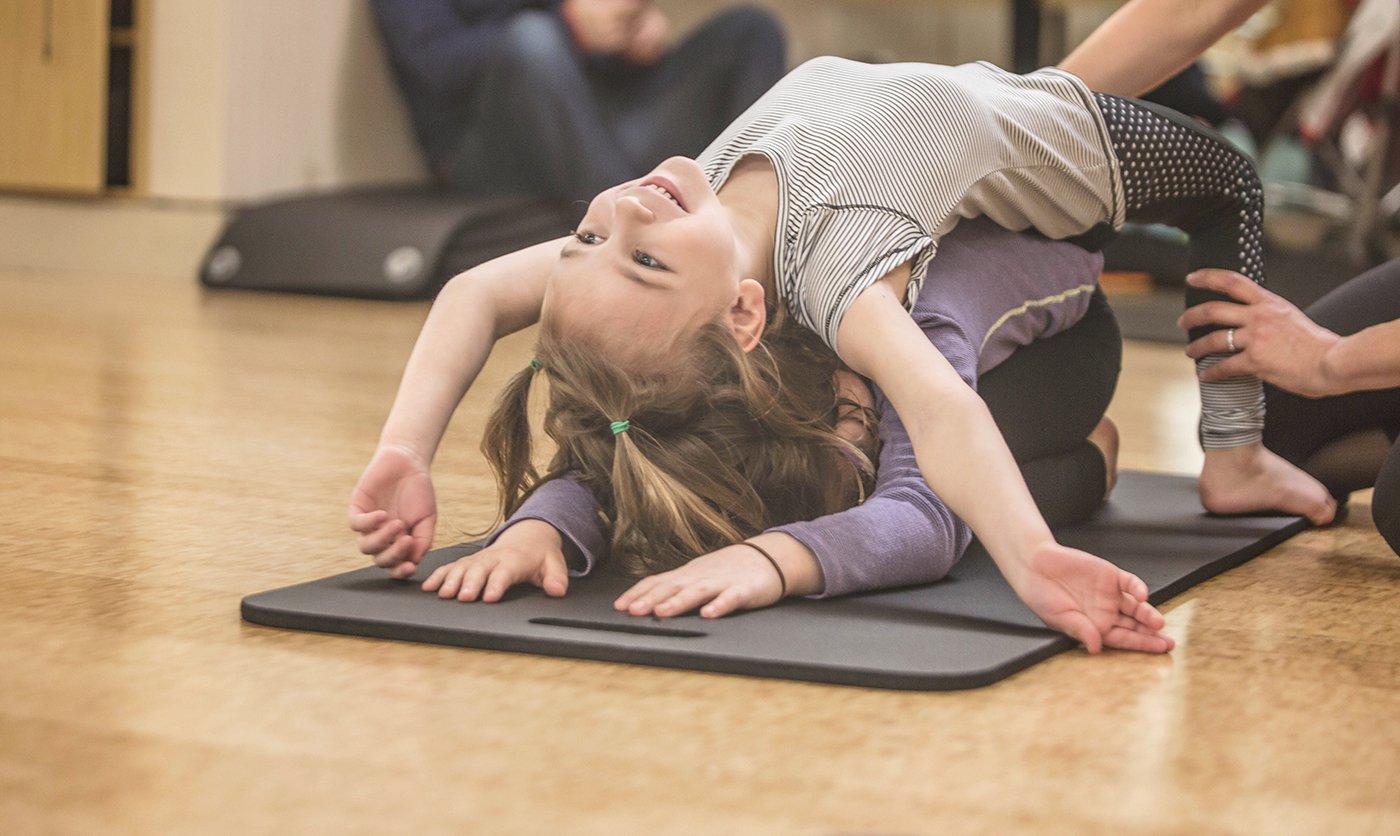
Don't Forget to Make it Fun and Interesting
Preparing a kid's yoga class that is as fun as a circus requires a dash of creativity, a sprinkle of playfulness, and a whole lot of variety. It's like planning a party where the guest of honor is laughter!
Here are some top tips to turn your class into the coolest hangout for tiny yogis:
Find Your Kid’s Yoga Theme:
Plan your class around an exciting theme like animals, nature, or favorite storybook characters. Weave the theme into yoga poses and activities for a cohesive and captivating experience.
Create an Interactive Kid Yoga Storytelling:
Tell stories that involve yoga poses. Encourage children to act out the characters or elements of the story through corresponding poses. Allow them to contribute to the story or suggest their own imaginative twists.
Use Props and Visuals:
Integrate colorful mats, props, and visual aids to enhance engagement. Props like soft toys or imagery cards can make the session more interactive and enjoyable.
Incorporate Games:
Introduce games that involve yoga poses, like "Musical Mats” (musical chairs with yoga mats and yoga poses). Games add an element of excitement and keep the children actively participating.
Creative Transitions:
Make transitions between poses fun by incorporating playful movements or short dances. Use music and encourage the children to express themselves freely during transitions.
Music and Movement:
Use lively and age-appropriate music to accompany poses and activities. Incorporate rhythmic movements or dance breaks to keep the energy high.
Partner Poses:
Introduce partner or group poses to foster teamwork and social interaction. Children can work together to create shapes or support each other in balancing poses.
Expressive Breathing Exercises:
Teach simple breathing exercises with imaginative names. Connect breath awareness to fun activities, making it an integral part of the session.
Encourage Choice and Independence:
Provide options for poses and activities, allowing children to choose what resonates with them. Offer opportunities for them to express their preferences and ideas.
Celebrate Achievements:
Acknowledge and celebrate small achievements, whether it's holding a pose or expressing creativity. Create a positive and supportive environment.
We hope that you enjoyed our ultimate guide to plan the best kid’s yoga lesson!
If you're eager to dive deeper into the world of kid's yoga or want to specialize in a particular aspect of bringing zen to tiny tots, Yogi Beans has a treasure trove of training waiting for you! Whether you're laying the foundation for teaching yoga to kids, exploring the intricacies of Kids' Yoga anatomy, or delving into the world of kid's yoga for special needs, we've got a kaleidoscope of skills to add some sparkle to your yogi journey.
Connect with us!
Welcome Friends!
Yogi Beans is a yoga and wellness company for children. Come make the world a brighter place with us!
Teach Kids Yoga with Confidence & Joy!

Kids yoga: when should kids start?
Learn when kids can start practicing yoga!

Kids yoga classes provide children with the opportunity to connect the body, mind and heart. These classes teach kids to internalize concepts of self–awareness, compassion,
In a kids’ yoga class, children are free to play, explore, question and grow their yoga practice in a non-judgmental and welcoming environment. Children are faced with numerous expectations in both school and their social lives, while also constantly stimulated by the internet, gaming, and social media. Now more than ever, the tools necessary to live a more mindful life are just as important for young people as they navigate the world.
Many have asked the question: can yoga really help children balance life and maintain a child’s mental health and wellbeing? This article will tell you everything about kids yoga benefits and when your children can start practicing.
Is Yoga Really Appropriate for Children?
Many schools around the country are beginning to incorporate yoga, SEL practices, and meditation within the school day because of yoga’s benefits for children. Some of these include increased strength and flexibility, breath and body awareness, increased focus and learning to relax.
In a 2016 Harvard Medical Study, “A growing body of research has already shown that yoga can improve focus, memory, self-esteem, academic performance, and classroom behavior, and can even reduce anxiety and stress in children.” * These studies also posit that with the benefit of increased focus and learning to relax, yoga can help children with attention deficit hyperactivity disorder (ADHD), support executive functioning, and can aid children with special needs.*
Today, children are experiencing more stress than ever to meet the standards of education, their caregivers, and social expectations. The practice of yoga is a tool that can help children deal with these stressors and provide the tools to help self-regulation.
When Should Kids Start Yoga?

Children are natural yogis and many studios begin to incorporate yoga for children as young as 6 weeks of age. The exercises in a baby yoga class enable a connection between baby and caregiver, and aid in physical and mental development.
As children grow, yoga classes for toddlers, preschoolers, elementary aged children, and tweens and teens begin to enhance the teachings of yoga by incorporating a more physical practice and layering in the mindful and meditative connection to the body.
At Yogi Beans, our kids yoga trainings are designed for real world applications in studios, classrooms, virtually and beyond for all age groups. For example, our Baby Bean Yoga Training teaches simple baby stretches, songs and poses designed for you to lead a class for infants to crawlers. Our training, The Building Blocks of Teaching Yoga to Kids, focuses on how to teach children from ages 2-10.
If you’re looking to learn on your own time, Yogi Beans offers a Video On Demand Training that provides a comprehensive look into creating and teaching a children’s yoga class including Pranayama (breathing), Asana (poses), mindful games, and meditation and Savasana.
What Type of Yoga is Good for Kids?
Creating an age-appropriate structure for a children’s yoga class is important. What works for a two-year-old will certainly not work for a ten-year-old!

The younger the child, the shorter attention span they have and the more movement activities they need.
Whereas with older children, refinement of yoga asanas as well as deeper looks into meditation, journaling, and mindfulness can begin to be applied.
Baby Yoga (6 Weeks-Crawlers): In a baby yoga class, anything can happen! These little beans are just beginning to recognize their body and explore their body’s limitations. These classes involve a caregiver to be present to assist the baby’s needs. Like all children, babies learn from example.
These classes provide an opportunity for caregivers to move their body in traditional yoga poses, while also allowing the baby to experience songs, gentle movements, and begin to form that mind-body connection.
Yoga for Toddlers (Ages 2-3): Children of this age have a lot of energy and once they are on their mats, expect to see a lot of movement! The general instruction and approach to class ought to be lively, lighthearted and flexible. The class should move at an energetic pace and the poses should be kept simple.
These classes involve songs, chants, and lots of contrast, while also exploring big explosive movements, before finding opportunities for stillness and calm.
Yoga for Preschoolers (Ages 3-4): Since younger children have short attention spans, your class format for this group still moves at a fast pace. Children of this age learn best through simple hands–on exercises, use of fun props and the repetition of songs, games and playful yoga poses.
Most importantly, class structure should remain consistent each week; obedience to directions should be encouraged but, generally speaking, not disciplined.
Yoga for Elementary Schools (Ages 5-7): Children of this age are advancing in physical and cognitive development and can readily engage in group discussions.
Make class extremely imaginative and introduce all age–appropriate poses and activities in a thoughtful sequence. Incorporate easily understood explanations of breathing techniques, yoga poses and concepts related to focus and concentration, while keeping the overall class environment light and fun. Teach the importance of following directions, and the consequences of misbehavior and disruption on the group’s experience.
Yoga for Late Elementary Schools (Ages 8-10): Instruction for this age group should begin to incorporate more challenging concepts and poses. Poses should be held for longer durations with a basic introduction to postural alignment. Focus on working both sides of the body to acknowledge the imbalances in all of us and increase strength and flexibility. Discussion of basic yogic concepts and terminology can be infused throughout class as well as pranayama (breathwork) such as Nadi Shodana breathing.
Children in these classes can also begin to explore more meditation and different exercises, where they have to tune inward, such as journaling, coloring mandalas, or the game Rose and Thorn.
If you want to learn how to practice yoga with your kids safely, have a look at our online courses. They’re easy, affordable, and you can learn how to practice yoga with your children at your own pace.
Whether you’re a caregiver, teacher, yogi, or someone who has a passion for yoga and working with children, the benefits of incorporating this will help children to become their highest and most mindful selves.

Anne Davidson is a senior teacher trainer and business developer at Yogi Beans. Connect with Anne at @anneedavidson on Instagram
Connect with us!
Welcome Friends!
Yogi Beans is a yoga and wellness company for children. Come make the world a brighter place with us!