
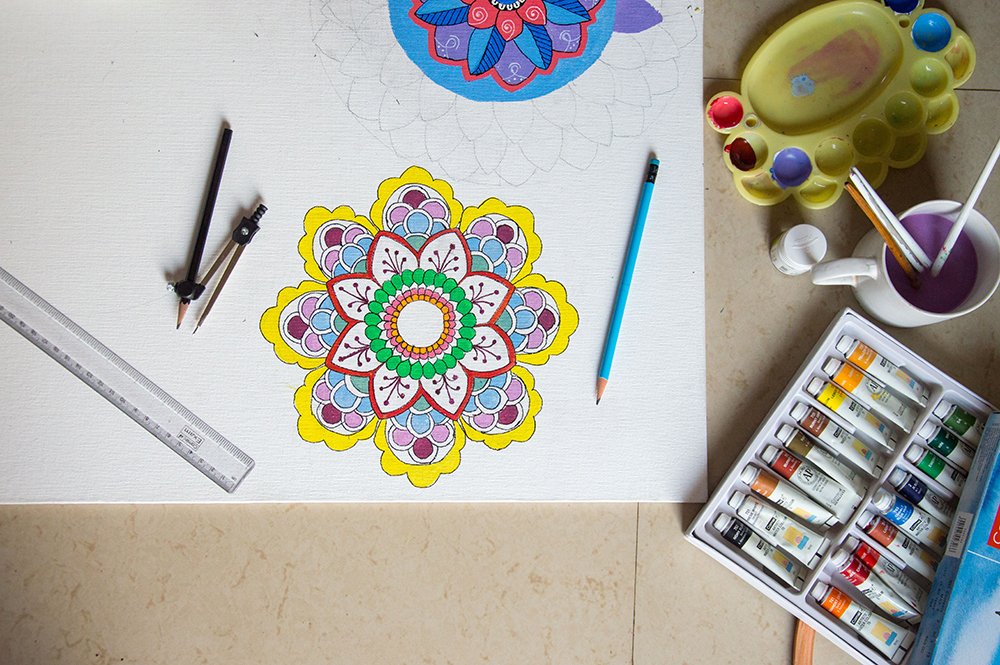
Did you know that one of the most influential psychologists in history, Carl Jung, was fascinated by mandalas?
Jung believed that mandalas were more than just artistic patterns. He saw them as spontaneous expressions of the psyche, often emerging during times of emotional turmoil as a way of restoring a sense of balance and wholeness. He even used his own mandala drawings as a way to explore his inner world and observe his emotional state.
In yoga, we also work with mandalas, often through the use of yantras: sacred geometric designs that represent cosmic principles, energies, or aspects of consciousness. Traditionally used as tools for meditation and concentration, they invite us to slow down, focus our attention, and find stillness within.
Finally, the beautiful thing is that : children don't need to understand any of this to benefit from the experience!
Simply choosing colours, repeating patterns, and focusing on the creative process can offer them a gentle opportunity to slow down, express themselves, and reconnect with the present moment.
At Yogi Beans, a leading kids’ yoga school dedicated to teaching yoga to children and training teachers, we share this belief in the power of mindful creativity. that’s why we’re excited to share how you can introduce mandalas to children and guide them through a mindful colouring experience.
PS : Check out our free mandala colouring pages for Kids (and their grown-ups) absolutely love them!
I. How to explain the concept of mandalas to children?
As adults, it’s often easier to understand the concept and purpose of mandalas. But how do we explain them to children? Abstract ideas can be difficult for little ones to grasp, so it often helps to use concrete, nature-inspired examples that spark their curiosity.
Here’s something you could tell them, adapting the explanation to their age:
Have you ever looked at a flower, a spiderweb, or a snowflake and wondered why you find it so beautiful or special? Perhaps it’s because of its shapes, patterns, or colours!
A mandala is a circular design made up of beautiful, funny, or interesting shapes and patterns.
Two things make mandalas so incredible:
One is that they can be created spontaneously, not only by us, but also by animals and nature. Mandalas are a bit like the way animals create art or draw!
Isn’t it incredible that the sky can create a snowflake, or that a tiny spider, with its tiny spider brain, can build such an intricate web?
The other thing that makes them so special is that they are all unique, just like every human and every animal.
One story I love sharing with kids, and one that always fascinates them, is that some Buddhist monks spend days or even weeks creating intricate mandalas out of coloured sand, only to dismantle them in a special ceremony once they're finished!
This beautiful tradition reminds us that nothing lasts forever and teaches us about impermanence and non-attachment: learning to appreciate things without needing to hold on to them.
While we would never ask children to destroy their mandalas, we could invite them to give one to someone special as a gift, discovering the joy of sharing something they've created with love.
II. The benefits of mandalas with children?
As you may remember from our introduction to Carl Jung and the use of yantras in yoga, mandalas are much more than just pretty, colourful drawings. And while young children may be too little to understand the deeper concepts behind them, they can still experience their benefits in a very natural way.
Through colouring and exploring patterns, children can practise focusing their attention, express their creativity, and enjoy moments of calm. Let's explore some of the ways mandalas can support their well-being.
Encouraging mindfulness and concentration: Following patterns, exploring colours, and paying attention to the movements of their hands invite children to slow down, focus on one activity at a time, and become more present in the moment.
Expressing creativity and emotions: Choosing colours and creating patterns gives children a way to express themselves freely, without needing to find the right words.
Supporting relaxation: The repetitive nature of colouring can feel calming and offer children a gentle opportunity to unwind, especially after a busy or stimulating day.
Building patience and confidence. Working on a mandala at their own pace allows children to enjoy the process, make their own choices, and appreciate what they create without worrying about getting it perfect.
Keep in mind that every child is different. Some children may find mandala colouring calming, while others may prefer more movement or hands-on activities. The goal isn't to make every child sit still, but to offer them another way to explore mindfulness and creativity.
III. How to work with mandalas and Children?
Whether your children are already curious about mandalas or are discovering them for the first time, a little guidance can help them get started. It can be as simple as inviting them to draw a mandala that represents how they feel at that moment.
Remember, the goal isn't to create a perfect picture or follow a set of strict rules. Mandala drawing should remain a free and personal process, allowing children to explore their creativity at their own pace.
If you or your children are new to mandalas, or if they're still young and would benefit from a little structure, feel free to download Yogi Beans' free mandala coloring pages! Children and adults who have tried them absolutely love them, and they're a wonderful way to get started.
Step-by-Step Guide to Mandala Activities for Kids :
1. Introduce the concept
Start by revisiting the definition of a mandala we shared earlier in this article. Even if children have worked with mandalas before, it's always nice to remind them that the word comes from Sanskrit and means "circle." Mandalas often represent balance, unity, and wholeness.
You can also invite children to look for similar patterns in nature, such as flowers, tree rings, and seashells. This helps them connect the concept to the world around them.
2. Set an intention
Depending on the children's ages and experience, you can let them create freely or introduce a simple intention to help them approach the activity mindfully.
One lovely exercise is to invite each child to choose a power word before beginning. It could be a feeling they want to explore, such as joy, anger, peace, or calm. They can then draw a mandala inspired by that word, without worrying about whether their creation represents it in a particular way.
3. Start at the centre
For beginners, starting at the centre and gradually working outward can be a helpful way to approach mandala drawing. They can begin with a simple dot or shape, such as a heart or a flower, and let their design grow from there.
As children become more experienced, they can experiment with different approaches, including starting from the outside and working inward. There's no single right way to create a mandala!
4. Explore different materials and approaches
Remember, mandalas aren't limited to drawing or colouring on paper. We can find inspiration for them in nature, art, and even movement!
Here are three creative ways to explore mandalas with children:
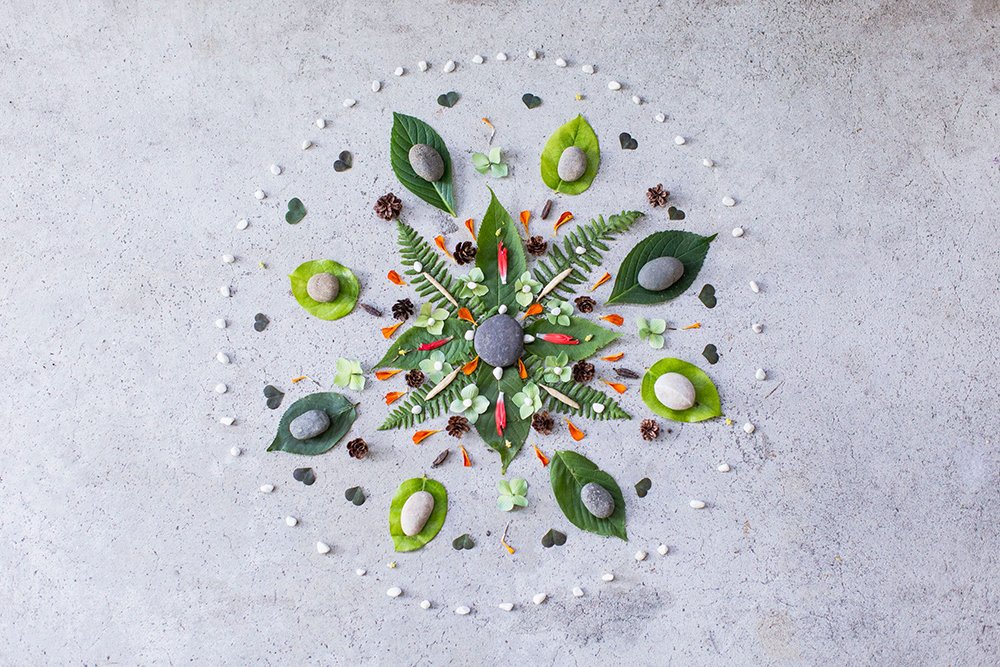
Nature mandalas: Head outdoors and invite children to collect natural materials such as rocks, leaves, flowers, shells, and twigs. They can arrange their findings into circular patterns on the ground or on a tray.
Art and colouring: Offer children the freedom to draw their own mandalas or use printable mandala coloring pages. You can also play some gentle background music to create a relaxing atmosphere.
Human mandalas: If you're leading a children's yoga class with a group large enough, why not create a human mandala? Invite the children to arrange themselves in a circular or symmetrical formation, using their bodies, yoga poses, or simple props to create a shared design. If appropriate, take a photo from above to capture the moment. It's a wonderful way to encourage connection, cooperation, and team building!
5. Encourage a mindful pace
Remind children that there's no need to rush or finish their mandala. Encourage them to take their time, breathe naturally, and pay attention to the shapes, colours, and patterns they're creating.
The goal isn't to make children sit still or follow instructions perfectly. It's to give them the opportunity to slow down, enjoy the process, and become more aware of the present moment.
Remember, these steps are simply suggestions to help you get started with mandalas. There are no strict rules to follow! Whether children draw, colour, arrange natural objects, or create a mandala together, what matters most is giving them the freedom to explore while encouraging a mindful and enjoyable experience.
IV. Mandalas for Art-Therapy
Throughout this article, we've explored how mandalas can offer children a creative and mindful way to develop emotional awareness and express themselves.
In a world where children and teenagers can struggle to understand and express their emotions, it's essential to give them opportunities from an early age to explore their feelings and discover healthy ways to navigate them.
Mandalas can be a wonderful tool for this. Beyond their beautiful shapes and patterns, drawing a mandala from the centre outward can offer children a way to express what's happening inside them and bring it into the outside world through art. This idea is closely connected to art therapy, which uses creative expression to support emotional exploration and well-being. And the good news is that you don't need to be a therapist to enjoy mindful mandala activities with your children!
Mandala Prompts for Emotional Awareness and Self-Expression :
Here are a few prompts to help children explore their feelings and express themselves through mandalas. Feel free to adapt them to their age and let their creativity guide the process.
Create a mandala that shows how you feel today. Which colours, shapes, or patterns represent how you feel right now?
Explore your inner and outer worlds. Inside your mandala, draw what's happening within you. In the outer circle, represent what's happening around you.
Explore your place within your family. Draw a mandala that represents how you see yourself within your family and the connections you share with its members.
Give your emotions a shape. If one of your feelings could become a shape, a pattern, or a colour, what would it look like? Create a mandala inspired by that feeling.
Create your own mandala of calm. Imagine a place where you feel safe, peaceful, and happy. Use shapes and colours to represent what helps you feel calm and comfortable.
We hope you've enjoyed exploring the world of mandalas with us! If you're ready to get started, don't forget to check out Yogi Beans' free mandala at the bottom of this page. They're a lovely way to introduce this practice to the children in your life.

Let’s go on a yoga adventure!
Let your imagination soar as you become a bouncing Frog 🐸, a magical Mermaid 🧜 or a soaring Rocket Ship! 🚀

Connect with us!
Welcome Friends!
Yogi Beans is a yoga and wellness company for children. Come make the world a brighter place with us!
