
Finding Calm: Restorative Yoga Poses to Help Children Relax
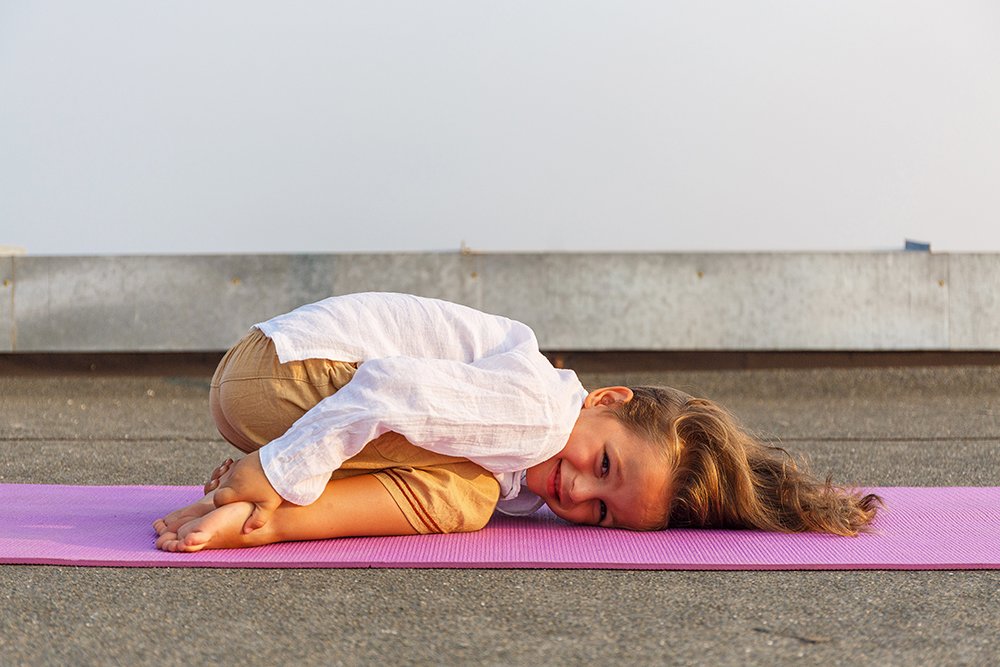
If there is one thing that makes children so special, it is their ability to be completely raw, present, and authentically themselves. They laugh when they are happy, cry when they are sad, jump when they are excited, and ask a hundred questions when they are curious.
They experience life fully, and they are not afraid to show it ; and that is beautiful!
However, sometimes those big emotions can become overwhelming. A child may feel euphoric after an exciting activity, nervous before a new experience, or simply have a hard time slowing down at the end of a busy day.
In these moments, telling a child to “calm down” is rarely enough. Children need tools that help them experience what calm actually feels like in their bodies.
This is where kids yoga can be so valuable. Through movement, breathing, stillness, and relaxation, children can begin to develop simple practices that support self-regulation and help them move from stimulation toward a calmer state.
This is at the heart of what Yogi Beans has been teaching children, families, and educators for the last 20 years: giving children practical tools to connect with their bodies, manage big feelings, and develop lifelong wellbeing skills.
So, how can you help a child relax and come back to themselves?
One beautiful place to start is with restorative yoga for children.
Below, you'll find a few simple restorative yoga poses and exercises you can practice with children at home, in the classroom, or whenever they need a little help finding their calm.
What Is Kids Restorative Yoga?
Restorative yoga is a gentle practice designed to support deep relaxation and rest. Rather than focusing on strength, flexibility, or physical challenge, restorative yoga uses comfortable, supported positions, often with props such as bolsters, blankets, blocks, or cushions, to allow the body to soften and the nervous system to settle. Poses are generally held for several minutes, giving its practitioners time to slow down, breathe, and simply be.
But restorative yoga for children looks a little different from restorative yoga for adults.
Children are naturally more active, curious, and responsive to their surroundings, so asking them to lie still in silence for 10 or 15 minutes may not be particularly restorative for them! Kids restorative yoga is therefore adapted to their developmental stage. Poses tend to be shorter and often incorporate stories, imagination, sensory experiences, breathing exercises, music, or gentle movement.
The goal isn't to make children practice stillness like adults. Instead, it is to give them an age-appropriate experience of slowing down, noticing how they feel, and discovering what helps their body and mind feel calm and safe.
For younger children especially, restorative yoga can look more like a journey: perhaps pretending to be a sleepy animal, building a cozy “nest” with blankets, listening to a calming story, or exploring a few supported poses before resting together.
In this sense, kids restorative yoga isn't simply adult restorative yoga made easier. It is a practice designed around the way children learn, play, regulate their emotions, and experience their bodies.
What Are the Benefits of Restorative Yoga for Kids?
Children spend a lot of their day moving between different levels of stimulation: school, screens, sports, social interactions, play, homework, and busy family life.
Restorative yoga offers a chance to really pause.
1. It can support self-regulation
Children are still developing the ability to recognize and manage their emotions. Gentle movement, breathing, and moments of stillness can give them practical ways to notice how they are feeling and experiment with shifting their state.
Over time, these practices can become part of their personal toolkit for dealing with moments of stress, excitement, frustration, or overwhelm. A child might eventually remember:
“I can lie down and give my body a rest.”
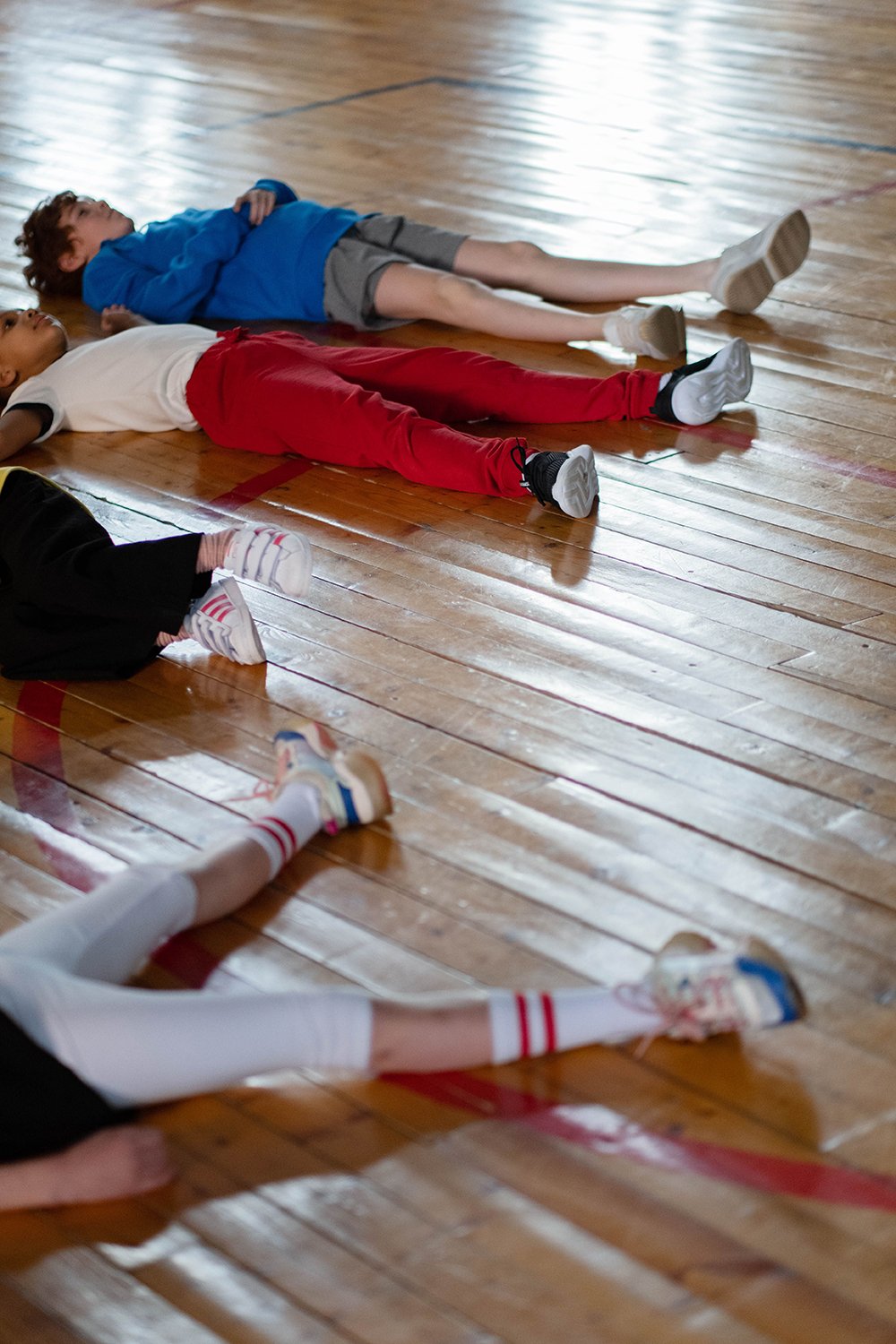
2. It encourages body awareness
Yoga invites children to notice sensations in their bodies: Is my heart beating quickly? Are my shoulders tense? Does my belly feel soft or tight?
This kind of body awareness can help children develop a stronger connection between their physical sensations, emotions, and internal experiences.
3. It creates a transition from activity to rest
Sometimes children don't need more stimulation; they need help transitioning from doing to being.
A short restorative sequence can be a beautiful bridge between a busy activity and a quieter moment, whether that's lunchtime, bedtime, or the end of a school day.
An Easy Small Restorative Yoga Sequence for Children to Relax
You don't need a yoga studio, complicated equipment, or a 60-minute class. A few minutes can be enough.
Try this simple sequence, or pick a couple of postures, when your child needs to transition from high energy to calm.
Before we dive in, don’t forget to set up the atmosphere if you can: dim the lights, put on soft, calming music in the background, and create a cozy, quiet space where your child can feel comfortable and relaxed.
1. Balloon Breathing
Invite your children to lie down or sit comfortably.
Ask them to imagine that their belly is a big balloon.
As they breathe in through their nose, the balloon slowly gets bigger.
As they breathe out, the balloon slowly gets smaller.
You can make this playful by asking:
“Can you make your balloon grow without moving your shoulders?”
Try 5–10 slow breaths.
The objective isn't to make children breathe perfectly. Simply encourage a slower, more comfortable breath.
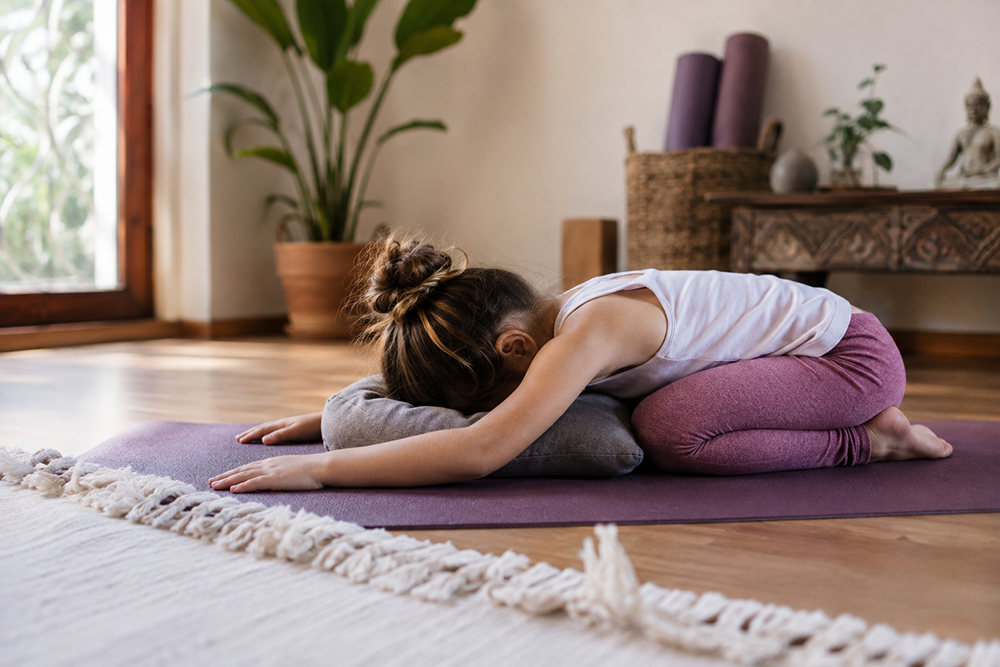
2. Supported Child's Pose
Ask your children to come into Child's Pose and place a pillow or bolster underneath their chest and head so they can completely relax into the support.
Let the arms rest wherever they feel comfortable.
You can invite them to imagine that they are a tiny seed resting underground.
There is nowhere to go. Nothing to do. Just rest.
Invite them to stay there for several comfortable breaths.
3. Happy Baby
Lie on the back and bring the knees toward the chest.
If comfortable, hold behind the thighs or gently hold the feet.
Rather than focusing on getting into the “perfect” shape, invite children to rock gently from side to side.
You could tell them:
“Imagine you're a happy little bug floating on its back.”
This keeps the pose playful while introducing gentle movement and body awareness.
4. Legs Up the Wall
This is one of the simplest restorative positions.
Lie on the back with the legs resting up against a wall, couch, or another safe surface.
The arms can rest beside the body or on the belly.
For children who don't enjoy staying still, turn it into a quiet imagination game:
“What can you see from your upside-down world?”
Stay for 1–2 minutes, or simply as long as the child feels comfortable.
5. The Cozy Cocoon
Finish by creating a comfortable resting position.
Let the child lie down with a blanket, pillow, or stuffed animal.
Invite them to close their eyes if they want to, or simply soften their gaze.
You can guide them through a short body scan:
“Can you feel your toes?”
“Can you relax your legs?”
“Can you soften your belly?”
“Can you let your shoulders become heavy?”
“Can you feel your whole body resting?”
Finish with a few moments of complete silence.
And then, let them wiggle!
Restorative yoga with children doesn't need to be perfectly quiet or perfectly still. The ability to move between activity and rest is part of the practice too.
Frequently Asked Questions
From what age can children practice restorative yoga?
Restorative yoga can be adapted for children from a young age, but the practice should always be age-appropriate, playful, and supervised by a responsible adult.
Younger children generally benefit from shorter practices, simple imagery, movement, and playful breathing rather than long periods of stillness.
As children grow, you can gradually introduce longer relaxation periods and more structured restorative sequences.
Is restorative yoga better for bedtime, the classroom, or midday calming?
It can be useful in all three settings—the sequence simply needs to change.
For bedtime, choose slower poses, dim lighting, quiet breathing, and longer relaxation.
For the classroom, keep it short and accessible. A few breaths and one or two restorative poses may be enough.
For midday calming, you might combine a little gentle movement with restorative postures to help children transition from high energy back to a more settled state.
What if my child isn't calming down?
Don't force relaxation.
This is one of the most important principles when practicing yoga with children.
If a child is extremely energetic, asking them to immediately lie still may actually make the experience frustrating. Start with movement instead.
Try shaking out the hands, jumping a few times, stretching, dancing, or taking a playful breath. Then gradually move toward slower activities.
Remember: the goal isn't to make a child calm on command. The goal is to help them discover what helps their own body feel more settled.
And sometimes, that means giving them a little more time.
Why do gentle yoga poses help relax a child's central nervous system?
Slow movements, comfortable positions, and deep belly breathing naturally send signals of safety to the nervous system. When children experience restorative yoga poses that are gently guided in a playful way, their nervous system naturally shifts from a more active, alert state toward a calmer state. This is particularly valuable because they are still developing their ability to self-regulate, and a regular yoga practice can teach them to grow with a more balanced nervous system.
Children don't need to suppress their emotions.
They need space to experience them, adults who can help them feel safe, and practical tools for navigating the moments when those emotions become overwhelming.
Restorative yoga can be one of those tools.
A pillow, a quiet corner, a few slow breaths, and five minutes of intentional rest may seem simple ; but for a child learning how to navigate their body and emotions, these small experiences can be powerful.
If you want to learn more about yoga for children, have a look at Yogi Beans’ website. Whether you’re a parent, teacher, or educator, we can give you the tools you need to help the children around you grow into happy, healthy human beings.

Let’s go on a yoga adventure!
Let your imagination soar as you become a bouncing Frog 🐸, a magical Mermaid 🧜 or a soaring Rocket Ship! 🚀

Connect with us!
Welcome Friends!
Yogi Beans is a yoga and wellness company for children. Come make the world a brighter place with us!
